Water Activities × Hair Care × Travel Planning
Rescue Diver course Hong Kong: prepare questions, not DIY procedures
Browse original Traditional Chinese water activity and hair-care guides →
Prepare for rescue training by gathering your certification and first-aid records, describing your recent diving honestly, and asking the instructor to confirm an appropriate learning sequence. Do not rehearse rescue procedures from videos or articles. Confirm supervision, assessment, scheduling and non-refundable booking terms before paying, and leave room for recovery and practical hair care around water sessions.
A rescue course can be an appealing next step when you want to become a more thoughtful dive buddy. The difficulty is knowing what preparation actually helps. Reading a dramatic incident account may make you feel informed, but it does not establish whether your qualification is accepted, whether your first-aid training is current, or whether you are ready for the proposed water sessions. A clear enquiry resolves those questions earlier than an ambitious training weekend booked on instinct.
For Canvas Blend readers balancing water activities with work, travel and colour appointments, preparation also has a practical side. You need enough time to learn, recover and wash comfortably after pool sessions, rather than squeezing everything around a photograph or dinner reservation. This guide focuses on the questions that shape that plan. Canvas Blend is a hair-colour salon, not a dive school, and shares ownership with DiveHarbour; this is planning information, not an independent review or a rescue tutorial.
Before lightening through the mid-lengths and ends, read about balayage Hong Kong, assess your current hair condition, and leave time to discuss a simple at-home care routine.
01
What should you want from rescue training before choosing a course?
Start with a reason you can explain without naming a certificate. Perhaps you want to notice problems earlier, communicate more clearly with a buddy, or understand how emergency planning fits into recreational diving. PADI describes rescue training as a shift from concentrating only on your own diving towards awareness of others. NAUI describes its course as developing risk management and the ability to handle limited diving problems and emergencies. Neither description means that a newly certified diver can solve every incident. [1] [2]
When reading the Rescue Diver course Hong Kong information, turn that goal into a specific question: what knowledge, supervised practice and assessment would help someone with my recent experience? Ask which agency will issue the certification and who will review your starting point. The answer should explain a learning route, not merely promise that a demanding weekend will make you confident. Confidence is useful when it reflects skills and judgement, not when it encourages taking on responsibilities beyond your training.
Also decide what you are not trying to accomplish. A rescue qualification is not a shortcut to professional guiding, medical expertise or unfamiliar diving environments. If your real concern is discomfort with ordinary dives after time away, say that first. If you are considering later professional study, ask about that pathway separately rather than assuming this course completes its requirements. A sensible goal gives the instructor something concrete to discuss and gives you a better basis for judging the proposed course.
02
Which prerequisites need checking rather than guessing?
Send the actual certification name and agency, not just the word advanced. PADI's published explanation says that a PADI Adventure Diver qualification with the Underwater Navigation Adventure Dive meets its rescue diver prerequisite; PADI Advanced Open Water also meets it. It distinguishes beginning knowledge and confined-water work from completing the open-water exercises and earning certification. A student may be able to start one part without yet being eligible to finish everything. Ask the instructor to confirm how the current requirements apply to your records. [1]
Do not transfer that rule automatically to NAUI. Its Rescue Scuba Diver page requires NAUI Open Water Scuba Diver or equivalent and calls for the instructor to establish adequate knowledge and capability before open-water training. It also specifies current equivalent basic life support CPR, first aid and emergency-oxygen certification when those components are not provided within the course, subject to applicable law. PADI's explanation requires CPR and first aid within the previous 24 months for rescue certification. These differences are a reason to request document review, not to declare one route easier. [1] [2]
If the review identifies a progression requirement, the Advanced Open Water Diver course Hong Kong page can support a separate conversation about structured experience. Ask whether that whole course is necessary for your selected rescue route or whether another recognised prerequisite applies. Do not buy an extra qualification simply because another diver took it first. Equally, do not assume that a card from a different agency will be accepted without review. The useful outcome is a written sequence with clear eligibility and completion conditions.
| Possible sequence | Question it addresses | Trade-off to confirm |
|---|---|---|
| Rescue course with accepted prerequisites | Are my records and present skills suitable? | Accepted documents do not replace assessment of current ability. |
| First aid or oxygen training plus rescue | Which supporting qualifications are missing or out of date? | Separate certificates, teaching time and fees may apply. |
| Supervised refresher before rescue | Would a skills review make scenario learning more appropriate? | Extra time or sessions may be needed before open water. |
| Further prerequisite training before rescue | Does my chosen agency require additional diver training? | Confirm the precise requirement rather than assuming every agency uses the same sequence. |
03
Could a refresher be the more useful first booking?
Consider a hypothetical diver who earned an advanced qualification several years ago, now has only a short Hong Kong visit, and wants rescue training before travelling with a friend. This is a planning example, not a real customer account. The qualification is relevant, but it does not explain current comfort, equipment familiarity or recent water experience. That diver's first message should disclose the gap and ask whether a supervised review is needed before scenarios, rather than presenting the holiday dates as a deadline the instructor must meet.
The Hong Kong scuba refresher boat dive information is useful for asking about that review, not for assuming a boat session is automatically the correct starting environment. Ask whether the proposed refresher begins in confined water, what the instructor needs to assess, and what would make open water inappropriate on the day. NAUI's rescue page explicitly places responsibility on the instructor to check knowledge and capability before open-water training. A refresher recommendation should therefore be discussed as preparation, not as an embarrassment or an optional formality. [2]
There is a real scheduling trade-off. Adding preparation may use time you hoped to spend on an outing, and it may introduce an additional cost that needs confirming. Skipping it may leave you trying to learn new material while still uncertain about familiar tasks. Do not resolve that tension by inventing drills with a friend. Ask for supervised practice that fits your qualification and the professional's assessment. If the available dates cannot accommodate the recommended sequence, postponing the rescue course is a legitimate planning choice, not a failed holiday.
If longer intervals between colour appointments appeal to you, read about babylights Hong Kong and discuss regrowth, upkeep, and your preferred level of brightness during consultation.
04
What should you ask about supervision and assessment?
Request a course outline that separates independent study from work requiring direct instruction. PADI describes knowledge development, a review of existing skills, rescue exercises and open-water scenarios as components of its course. You can prepare by completing assigned theory and writing down anything you do not understand. That is different from copying a physical response from an online demonstration. Knowing a scenario's purpose does not teach you to carry it out appropriately with another person in the water. [1]
Ask who briefs each practical session, how the learning group is organised, and how the instructor checks understanding before an exercise begins. You can ask how scenario boundaries and the signal for stopping will be explained without requesting a written rescue procedure to practise at home. Also ask how feedback is given and what happens when a student needs further instruction. A clear answer about repeating or deferring an assessment is more useful than a claim that everyone passes if they attend.
Describe worries in ordinary language: I become uneasy in crowded water, I have difficulty following a long briefing, or I need to discuss a mobility concern. Those statements help the team consider the learning environment without pretending that a blog can assess fitness. Where the participant questionnaire requires medical evaluation, an appropriately qualified clinician must make that decision. Tell the instructor about discomfort or illness rather than treating payment as a reason to continue. Urgent symptoms require appropriate medical help, not reassurance from a course article.

05
How can you build a realistic calendar before paying?
Begin with the study workload and the proposed practical sessions, then add travel and recovery time. Ask for the current meeting arrangements and expected finish time, but distinguish an estimate from a guaranteed return. A location page does not establish a permanent classroom or a fixed departure point. Confirm the actual venue, transport, equipment provision and who communicates changes. If you have onward travel, ask for current professional guidance on planning it around diving; this article does not calculate a personal flying interval.
Request the complete written quotation rather than comparing headline fees alone. It should identify the agency route and explain materials, supporting first-aid modules, equipment, certification and any venue or boat arrangements. DiveHarbour states that all paid course and activity fees are non-refundable. Make-up sessions are available only under the written terms, and a replacement date is not guaranteed. Ask how those terms deal with missed sessions, changes in conditions and incomplete assessment before paying. Do not fund a tight itinerary on the assumption that a postponed session produces a refund.
Colour appointments belong in this calendar only when they are relevant to your plans. If you are considering a substantial change before training and a special event, read the hair-colour before-and-after planning guide to prepare a separate salon conversation. The American Academy of Dermatology advises considering the timing of blond colouring or highlighting before a sun- and pool-heavy trip because bleaching can increase vulnerability to those exposures. That supports discussing the order of appointments; it does not establish a universal number of days after which colouring and diving become safe. [3]
06
Which hair and scalp decisions belong in your water-session plan?
First find out whether your course includes a chlorinated pool, open water or both. That distinction matters when interpreting hair advice. AAD describes chlorine-related damage and recommends prompt rinsing after swimming, followed by a swimmers' shampoo and conditioning after pool exposure. Its chlorine guidance should not be presented as a description of seawater. Use the post-colour hair-care guide to discuss a routine suited to your existing treatment, and ask about access to fresh water and changing facilities rather than assuming they will be available at every session. [3]
If you already have lightened, fragile lengths, the question is whether another chemical service belongs before this particular training block. AAD highlights the vulnerability of blond and highlighted hair to sun and pool exposure. The guide to bleaching and hair damage can help frame a realistic discussion about your current hair condition and goals. Keeping the existing colour for the course may be a practical choice when a major change would create extra maintenance immediately before travel. It is a trade-off, not a promise that postponing a service prevents all damage. [3]
Keep appearance concerns separate from participation decisions. The hair-colour fading guide is relevant if maintaining a particular shade matters for an event after training. Ask what maintenance is reasonable, but do not expect a shampoo, cap or salon service to guarantee unchanged colour. AAD also identifies UV exposure as a source of hair damage; shade and an appropriate hat are options during ordinary time ashore. Equipment worn for training still needs the instructor's approval, and an accessory should never be assumed compatible because it looks tidy in a photograph. [3]
A tender or irritated scalp needs its own conversation. The sensitive-scalp hair-colour guide can help you describe symptoms and treatment history to a colourist, while the scalp-care-before-colouring guide supports planning a consultation rather than rushing into another chemical service. Neither page gives medical clearance for diving or makes a protective product capable of eliminating allergy risk. Seek appropriate medical advice about persistent or concerning symptoms, and tell the instructor about discomfort that could affect participation.
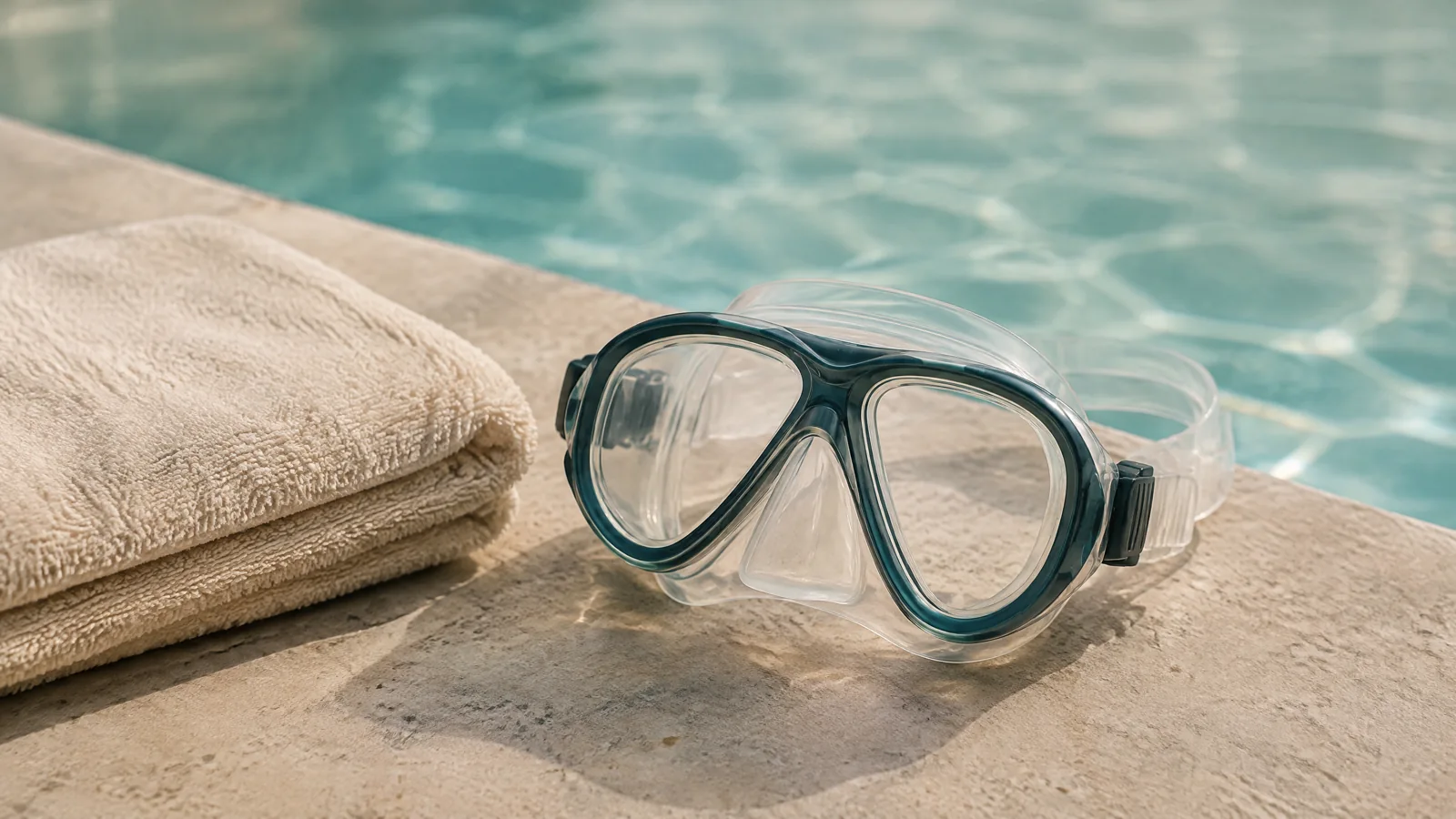
For the session itself, ask the instructor to check your actual mask fit with your hair arrangement and any approved accessories in place. Do not put oil, petroleum jelly or conditioner on a mask, adhesive or other diving equipment as a workaround. Keep hair-care products separate from the equipment and use them according to appropriate instructions. The practical aim is uncomplicated changing and washing after training, with no pressure to continue through discomfort merely to protect an appointment or hairstyle.

07
What should your first enquiry contain to get a useful answer?
A useful first message makes the unresolved issues visible. Include your certification agency and level, approximate recent diving history, first-aid records and preferred date range. Explain why you want rescue training and mention any uncertainty about returning to the water. Ask how health information and supporting records should be submitted appropriately; you do not need to send private medical details into an ordinary group conversation. If travelling with a friend, provide each person's starting point separately rather than describing both through the more experienced diver.
You might write: I am considering rescue training to improve buddy awareness. Here are my diver and first-aid qualifications and the date of my last dive. Please confirm the available agency route, whether my records meet its prerequisites, and whether a refresher or additional training should come first. Please also explain the practical-session setting, assessment process, inclusions and written terms. This is an enquiry example, not a claim that any particular course or date is available. It gives the team enough information to identify what still needs checking.
Before accepting the proposal, compare the response with your actual calendar and budget. If it does not explain a supporting qualification or the treatment of an incomplete session, ask again before payment. If your main need is a return-to-diving review, accept that the rescue course may belong later. The most useful preparation is not memorising a rescue sequence; it is making sure the agreed course, supervision and timing address the person you are now rather than the diver described by an old certification card.
- Send the exact certification agency and level, with the records the provider requests.
- State the last dive date, recent experience and any confidence concerns honestly.
- Provide first-aid, CPR and emergency-oxygen certificate details where relevant; ask which are accepted.
- Ask whether document review or supervised preparation is needed before practical training.
- Request the current venue, teaching language, supervision and assessment arrangements.
- Obtain an itemised quotation and the non-refundable payment and written make-up terms.
- Check that study, transport, recovery and necessary personal-care arrangements fit the proposed dates.
What else should you know about water activities, hair care and planning?
Should I practise rescue drills with a friend before the course?
No. Complete only the preparation assigned by the instructor, such as theory and document review. Physical rescue practice belongs within formal supervision and the selected agency's training. An article or video is not permission to rehearse a procedure.
Does Advanced Open Water automatically make me eligible?
Not by itself. PADI's published explanation identifies it as meeting the diver prerequisite, but first-aid status and other requirements still need checking. Other agencies have their own requirements, and the provider must review your specific records and present ability. [1] [2]
Must I buy new first-aid training with rescue training?
Not necessarily. Ask whether your existing qualification is accepted and current for the chosen route. PADI's explanation requires CPR and first aid within the previous 24 months for certification; NAUI describes current equivalent supporting qualifications when not included in its course. Do not assume every certificate covers the same requirements. [1] [2]
Can a short visit guarantee course completion?
No. Completion depends on meeting prerequisites and assessment requirements, and the practical plan must remain appropriate. Ask about the proposed schedule and written make-up terms, but do not treat an alternative date, a particular venue or certification as guaranteed.
Are DiveHarbour fees refundable if I miss a session?
All paid course and activity fees are non-refundable. Make-up sessions are subject to the written terms, with no guaranteed replacement date. Read the applicable terms before payment and ask how they apply to the circumstances you are concerned about.
Is there a fixed waiting period between colouring and diving?
This guide gives no universal waiting period. Discuss the treatment, current hair and scalp condition, and expected pool or outdoor exposure with the appropriate professional. AAD advises considering blond-colouring timing before sun- and pool-heavy travel, but that is not medical clearance or a guarantee against fading or irritation. [3]
What is the next step for travel and hair-care planning?
Your next step is a focused enquiry, not a home rehearsal. Gather your diver and first-aid records, describe recent experience honestly, and request a written learning sequence that explains prerequisites, supervision, assessment, inclusions and non-refundable terms. If a refresher or supporting qualification belongs first, build the calendar around that recommendation rather than an optimistic completion date.
Then make the surrounding days workable: leave room for study and recovery, confirm washing facilities where relevant, and discuss any significant colour change separately. A well-prepared rescue-course plan makes uncertainty easier to address before training starts. It does not promise an emergency outcome, replace medical assessment or turn reading into an in-water skill.
Before choosing a new colour, review hair colour price Hong Kong alongside your hair length, density, and preferred technique so you can plan the appointment with clarity.
Sources and editorial notes
- [1] PADI — How Hard is the Rescue Diver Course?
- [2] NAUI — Rescue Scuba Diver
- [3] American Academy of Dermatology — Must-try summer hair care
This AI-assisted Canvas Blend editorial guide is not a real-client or travel record and is not an independent review. Canvas Blend and DiveHarbour share the same owner; resource links are not independent third-party endorsements. It was not written or reviewed by Vit So in the capacity of a diving instructor; his salon experience does not establish diving-teaching qualifications. It covers water activities, hair care and travel/course planning, not diving instruction, emergency procedures or personal medical clearance. Ask a qualified medical professional about individual medical fitness, and obtain technical training from a qualified instructor. Confirm current external course fees, dates, terms and eligibility directly with DiveHarbour. DiveHarbour’s written terms provide no refunds; only eligible make-up arrangements may be considered under those written terms, with no guaranteed make-up session. Canvas Blend salon enquiries and DiveHarbour external course enquiries, payments and bookings must be handled separately.
Canvas Blend editorial / AI-assisted. Canvas Blend is a hair-colour salon and shares ownership with DiveHarbour; this article is not an independent review, instructor advice or medical advice. No dive-instructor review or personal course experience is claimed. Confirm current services, prerequisites, venues, inclusions and written terms with the provider. All paid DiveHarbour course and activity fees are non-refundable; make-up sessions are subject to written terms. Any accompanying AI-created illustration is illustrative, not evidence of actual facilities or training.
More Water Activity and Hair-Care Guides
 Water, Travel & Hair Care
PADI Bubblemaker Hong Kong for kids: keep comfort and consent first
Plan a child-centred Bubblemaker enquiry in Hong Kong, with readiness questions, an honest stop plan, separate family roles and practical pool-day hair care.
Water, Travel & Hair CareJunior Open Water Diver course Hong Kong: plan a family learning week
Plan a realistic junior diving learning week around your child's readiness, family responsibilities, weather flexibility and practical swimming hair care.
Water, Travel & Hair CareFamily scuba diving experience Hong Kong: choose separate goals
Plan a family scuba day around individual goals, junior readiness, flexible schedules and practical hair-colour care, without making everyone follow one course.