Water Activities × Hair Care × Travel Planning
How to book a scuba diving course in Hong Kong without rushing
Browse original Traditional Chinese water activity and hair-care guides →
Choose the learning route before choosing the date. Send your experience and several date windows, then confirm the course, prerequisites, session plan, inclusions and payment terms in writing. Keep room for learning and operational changes. All paid DiveHarbour fees are non-refundable; make-up sessions depend on the written terms, not an assumed right to reschedule.
A scuba course can look like one more weekend appointment until you place it beside work, transport, a holiday and a fresh colour service. The difficulty is not simply finding an empty square in the diary. It is understanding which commitments depend on other decisions: medical screening before water training, learning preparation before practical sessions, and the actual meeting arrangements before you plan the journey. A calmer booking starts by identifying those dependencies rather than paying first and hoping everything fits.
For Canvas Blend readers, this is also a useful way to protect an ordinary routine. You may want time to rinse your hair after pool practice, avoid rushing straight into an event, or reconsider an intensive colour appointment during a busy training period. None of those preferences should dictate underwater safety decisions. This guide separates questions you can settle at home from decisions that require an instructor, the provider's written terms or a clinician, so your calendar supports learning instead of pressuring it.
If your hair feels dry, fragile, or difficult to detangle after lightening, explore damaged hair treatment Hong Kong before planning another colour service or adjusting your home-care routine.
01
What do you actually want this booking to achieve?
Begin with the outcome, not an agency logo or a friend's finishing date. Do you want a supervised introduction to see whether scuba interests you, or an entry-level certification course? If you already hold a qualification, are you seeking further training or returning after a long break? Those starting points need different conversations. A short introductory experience should not be mistaken for completion of the knowledge and practical assessments in a certification course.
PADI describes its certification pathway as knowledge development, confined-water learning and open-water dives. Its FAQ also explains that the course is performance based: learners earn certification by demonstrating the required knowledge and skills, not merely by attending for a set number of days. That makes a promised personal finishing date the wrong starting assumption. Ask which agency and course are proposed, what preparation is expected and how the instructor handles a learner who needs more practice. [1]
The overview of Hong Kong scuba lessons for beginners can help you prepare that first conversation. Use it to identify questions about lesson structure and learning pace, rather than treating general page text as your individual itinerary. If you are enquiring for two people, describe each person's background separately. Sharing a booking message does not establish that both learners need the same route, can progress together or will receive the same certification outcome.
02
How much flexibility does your calendar really contain?
Write down three kinds of time: commitments that cannot move, windows that might work and optional plans you can release. Include the preparation period, not just the water days. Ask when learning materials must be completed and whether the proposed finish time includes a debrief and returning equipment. Do not translate a morning session into an assumed free afternoon until you know the reporting point, transport arrangements and expected duration.
Consider a hypothetical learner, not a real customer: Alex works shifts, hopes to learn before a holiday and has a colour appointment followed by a family dinner. A single available weekend looks attractive, but it leaves no room if the learning plan changes. Alex could postpone the colour appointment, offer another training window or ask whether a split schedule is possible. The trade-off is practical: protecting every existing commitment may mean postponing certification rather than compressing it into an unsuitable plan.
A private scuba course with flexible schedule Hong Kong enquiry is relevant when the constraint is genuinely a complex diary or a need for focused pacing. Explain what cannot move and provide alternatives. Private scheduling is not unrestricted date selection; instructor, venue, boat and operating arrangements still need confirmation. Nor does it remove course requirements. PADI's performance-based approach is a reason to ask for a workable learning sequence, not to buy a guarantee of faster completion. [1]
03
Which questions should be resolved before you commit money?
Bring swimming, health and access questions into the conversation early. PADI's FAQ describes a 200-metre swim, or a 300-metre swim using mask, fins and snorkel, plus ten minutes of floating or treading water as basic water-skills requirements. These are requirements for that PADI pathway, not a universal test for every programme. Ask what applies to the course being offered and describe your actual water confidence; a timetable cannot resolve an unexamined prerequisite. [1]
Ask how to obtain and submit the current medical questionnaire privately, and allow time for assessment when the form or local requirements call for it. PADI states that medical concerns identified through screening require physician assessment; only a doctor can assess an individual's medical risk. Do not interpret an online article, a friend's experience or a successful booking payment as personal clearance. If you need professional advice, resolve that before committing to an ambitious training deadline. [1]
Keep equipment comfort questions separate from medical decisions. Mention prescription eyewear, accessibility needs or a scalp concern that might affect what you can comfortably wear. The Canvas Blend sensitive scalp and hair colour guide can help you organise colour-service questions, but it cannot determine fitness to dive. Ask the instructor to confirm actual equipment fit, and seek appropriate clinical advice for symptoms. There is no need to share a detailed medical history in a general group chat.
When viewing colour inspiration, ask about grey coverage hair colour Hong Kong to compare a low-contrast transition with fuller coverage, then choose the look that suits your preferred upkeep.
04
What written evidence turns an enquiry into a clear booking?
An enquiry reply, a quotation and a confirmed arrangement are not automatically the same thing. When you book a scuba diving course in Hong Kong, ask DiveHarbour to specify the exact course and agency, participant details, agreed dates, meeting arrangements and the point at which the booking becomes confirmed. A friendly message about a possible date is useful progress, but it is not evidence that a particular instructor, boat or place has been secured.
Request inclusions in plain language. PADI's FAQ recommends checking materials, required personal equipment, rental gear, additional boat or certification fees, class size and training location. Apply those questions to the actual quotation instead of comparing headline totals alone. [1] If equipment or transport is excluded, find out what you must arrange and by when. A lower-looking figure is not necessarily a better fit if it leaves unresolved purchases, unfamiliar journeys or a format that does not match your needs.
Read the payment terms before transferring money. All paid DiveHarbour course and activity fees are non-refundable. Make-up sessions are possible only under the applicable written terms and are not guaranteed. Ask how a missed session or operational change is handled without assuming it creates a refund or an automatic replacement date. Save the quotation, final confirmation, terms and receipt together. Where messages disagree, request one corrected written account rather than deciding for yourself which version will apply.
| Record | Useful evidence | Still needs confirmation |
|---|---|---|
| Initial enquiry | Your goal, experience and possible dates | Course fit, availability and prerequisites |
| Proposed session plan | The intended sequence and reporting arrangements | Whether each date and location is confirmed |
| Written quotation | The stated price, format and inclusions | Exclusions, payment deadlines and applicable terms |
| Final confirmation and receipt | The agreed arrangement and payment record | Any later approved change and its written conditions |
05
Where should hair colour sit in the training calendar?
Treat colour timing as a separate planning discussion rather than another condition the instructor must work around. Tell your stylist whether the proposed course includes pool sessions, repeated water days or an event immediately afterward. The Canvas Blend hair colour before-and-after planning tips are a useful starting point for preparing that discussion. Ask about your intended result, current hair condition and realistic maintenance instead of looking for one waiting period that supposedly makes every chemical service safe.
If you are already balancing frequent touch-ups with training, use the guide to how often to colour hair to frame questions about your longer-term routine. AAD recommends reducing damaging habits and allowing more time between colour touch-ups where practical. [2] That general advice does not establish a personalised interval between colouring and scuba. Neither a calendar gap nor a protective product eliminates allergy risk, and symptoms deserve appropriate professional assessment rather than a convenient date calculation.
Return to Alex's hypothetical diary. Moving a major colour change until after the proposed water sessions might reduce the pressure to preserve a freshly styled appearance during training. Keeping the appointment could still be a preference to discuss with the stylist, but Alex would need realistic expectations and time for care. The aim is not to declare one sequence universally correct. It is to avoid spending on an ambitious appearance goal and then feeling compelled to rush learning or ignore discomfort to protect it.
06
What practical care time should you reserve after water sessions?
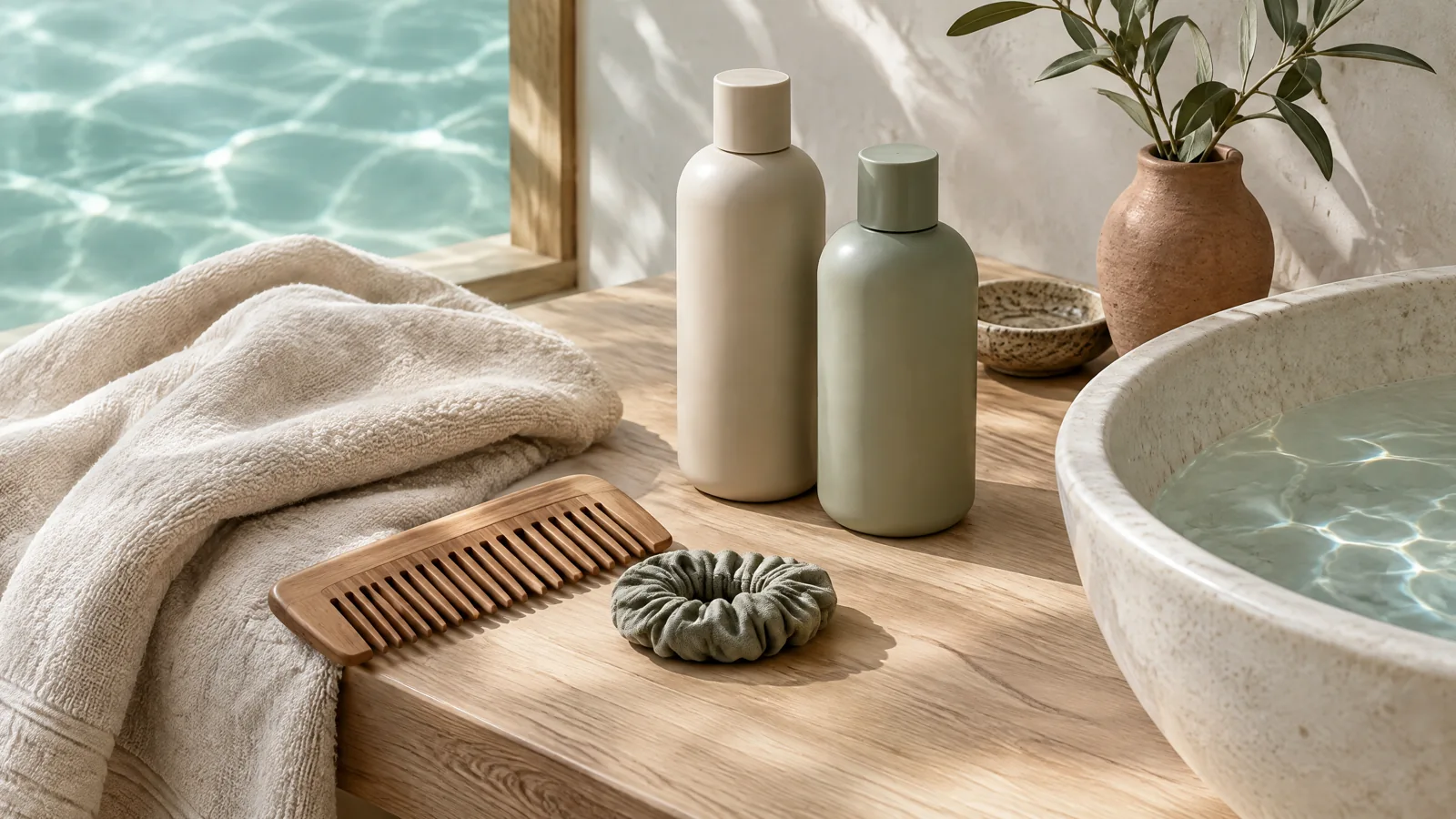
Ask about access to rinsing and changing facilities before deciding what to carry or scheduling your next appointment. AAD says pool chemicals can be hard on hair and recommends rinsing immediately after swimming, followed by a swimmers' shampoo and deep conditioner. [2] Its guidance is pool-specific; do not turn it into a promise that one routine prevents every effect of seawater or preserves every colour. If convenient facilities are unavailable, understanding that limitation in advance helps you plan the journey home.
For colour-treated hair, the Canvas Blend post-colour hair care guide provides questions to discuss when choosing a manageable routine. Pack according to the confirmed session and your existing care needs, not a collection of unfamiliar products bought in a hurry. Keep hair-care substances off the mask and other diving equipment. AAD mentions swim caps for pool hair protection, but any cap or hairstyle used during scuba must be discussed with the instructor so appearance choices do not substitute for a proper fit check. [2]
If you notice fading during a period of regular water activity, the hair colour fading guide can help you describe the change to your stylist without immediately booking another chemical treatment. AAD also advises against rubbing hair with a towel, pulling it tightly and excessive heat styling. [2] Allow a low-pressure period for drying and changing instead of promising an event-ready finish as soon as training ends. A realistic buffer is often more useful than an elaborate routine you have no time to follow.
- Confirm whether rinsing and changing facilities are available at the actual venue.
- Bring a towel, dry clothes and the personal items requested by the provider.
- Keep your usual hair-care items separate from diving equipment.
- Ask the instructor about hairstyle, cap and mask-fit questions before the session.
- Avoid an immediate appearance-critical commitment after an uncertain finish time.

07
What should you do if the proposed plan no longer works?
Decide in advance what would make you pause: unresolved screening, insufficient preparation time, a work conflict or uncertainty about the course being offered. Before payment, pausing is a chance to clarify the arrangement rather than force a decision. After payment, contact the provider promptly and ask what the written terms permit. Keep the non-refundable fee boundary in mind; a request for a make-up session is a request, not a replacement date you can enter into the diary as confirmed.
Operational changes need the same discipline. Ask which communication channel will be used, when you should check it and who supplies revised reporting instructions. If a session moves, revisit transport, work leave and any linked appointments instead of updating only the water date. Do not treat a preferred coastal area as a fixed classroom or assume the next session uses the same pier or pool. The revised arrangement should be recorded clearly enough that everyone is following the same plan.
Learning changes are different from diary mistakes. If the instructor identifies a need for further practice, ask what remains outstanding, what the next supervised step is and how any additional arrangements are handled. PADI explicitly places demonstrated competence ahead of elapsed time. [1] An upcoming holiday is useful context, not a reason to insist on certification. Tell the instructor promptly if you feel unwell or uncomfortable; urgent symptoms require appropriate medical help. Accepting a slower plan can be the most responsible outcome of careful booking.
What else should you know about water activities, hair care and planning?
How early should I enquire about a course?
Enquire once you know your goal and some possible date windows. There is no universal lead time: preparation, screening, instructor arrangements and venue or boat logistics vary. Ask for current options before committing connected travel or appointments.
Does paying mean I will finish certification by my holiday?
No. Certification depends on the relevant course requirements and assessment, not payment or a travel deadline. PADI describes its course as performance based. Tell the provider your deadline and ask whether the proposed plan is realistic. [1]
Can I receive a refund if I change my mind?
All paid DiveHarbour course and activity fees are non-refundable. Read the written terms before payment and do not make a booking on the assumption that a change of mind will be refunded.
Does a private course guarantee the dates I choose?
No. A private enquiry allows discussion of your constraints and learning needs, but dates depend on confirmed instructor, course, venue, boat and operating arrangements. Flexibility does not remove training requirements or guarantee completion.
Can I automatically make up a missed water session?
No. Make-up sessions are possible only under the applicable written terms and are not guaranteed. Contact DiveHarbour promptly, ask what is permitted and wait for written confirmation before relying on another date.
Is there one safe waiting period between hair colouring and scuba?
This guide does not provide a universal waiting period. Discuss the chemical service, hair and scalp condition, planned water exposure and symptoms with the relevant professionals. Products and waiting periods do not eliminate allergy risk or establish medical fitness to dive.
What is the next step for travel and hair-care planning?
Your next step is a concise enquiry with your learning goal, experience, preferred language and two or three possible date windows. Add any firm travel deadline and ask for the prerequisites, complete session plan, inclusions and written terms. Keep one record of the reply and distinguish proposed details from confirmed ones. Then place transport, colour appointments and post-water care around the confirmed training arrangements—not the other way round. If the plan leaves no room for preparation or honest reassessment, change the plan before committing rather than asking learning to fit an impossible calendar.
From root touch-ups to pre-wedding colour planning, use hair colour price Hong Kong as an initial reference and discuss your current hair condition before confirming the service.
Sources and editorial notes
- [1] PADI: Become a Certified Scuba Diver FAQs
- [2] American Academy of Dermatology: 10 hair care habits that can damage your hair
This AI-assisted Canvas Blend editorial guide is not a real-client or travel record and is not an independent review. Canvas Blend and DiveHarbour share the same owner; resource links are not independent third-party endorsements. It was not written or reviewed by Vit So in the capacity of a diving instructor; his salon experience does not establish diving-teaching qualifications. It covers water activities, hair care and travel/course planning, not diving instruction, emergency procedures or personal medical clearance. Ask a qualified medical professional about individual medical fitness, and obtain technical training from a qualified instructor. Confirm current external course fees, dates, terms and eligibility directly with DiveHarbour. DiveHarbour’s written terms provide no refunds; only eligible make-up arrangements may be considered under those written terms, with no guaranteed make-up session. Canvas Blend salon enquiries and DiveHarbour external course enquiries, payments and bookings must be handled separately.
Canvas Blend editorial / AI-assisted. Canvas Blend is a hair-colour salon and shares ownership with DiveHarbour; this is not an independent review. It is course and everyday-care planning information, not instructor-led training, medical advice or individual clearance. Current arrangements and written terms must be confirmed separately. Any AI-created illustration is illustrative, not evidence of real facilities or a photographed course.
More Water Activity and Hair-Care Guides
 Water, Travel & Hair Care
Try scuba diving Hong Kong: prepare comfort questions, not shortcuts
Prepare for a first Hong Kong try dive with better questions about comfort, supervision, equipment fit, hair care and booking terms—not DIY scuba shortcuts.
Water, Travel & Hair CareHong Kong scuba lessons for beginners: experience or certification?
Choose between a supervised scuba experience and beginner certification in Hong Kong, with practical advice on learning pace, travel, booking terms and coloured-hair care.
Water, Travel & Hair CarePADI eLearning Open Water Hong Kong: How to Plan Study and Wet Sessions
Build a realistic PADI eLearning-to-water calendar around work, travel and hair-colour care, with practical questions about screening, session timing and written fees.