Catering × Gifts × Cakes × Floristry × Occasion Styling
Baking Class: Choose Repeatable Skills Before the Finished Photo
Browse original Traditional Chinese celebrations and everyday aesthetics articles →
Choose a baking class by the technique you want to perform independently afterwards, rather than by the most impressive finished cake. Ask who does each stage, how much practice you receive and whether the recipe can be repeated with your home equipment before deciding.
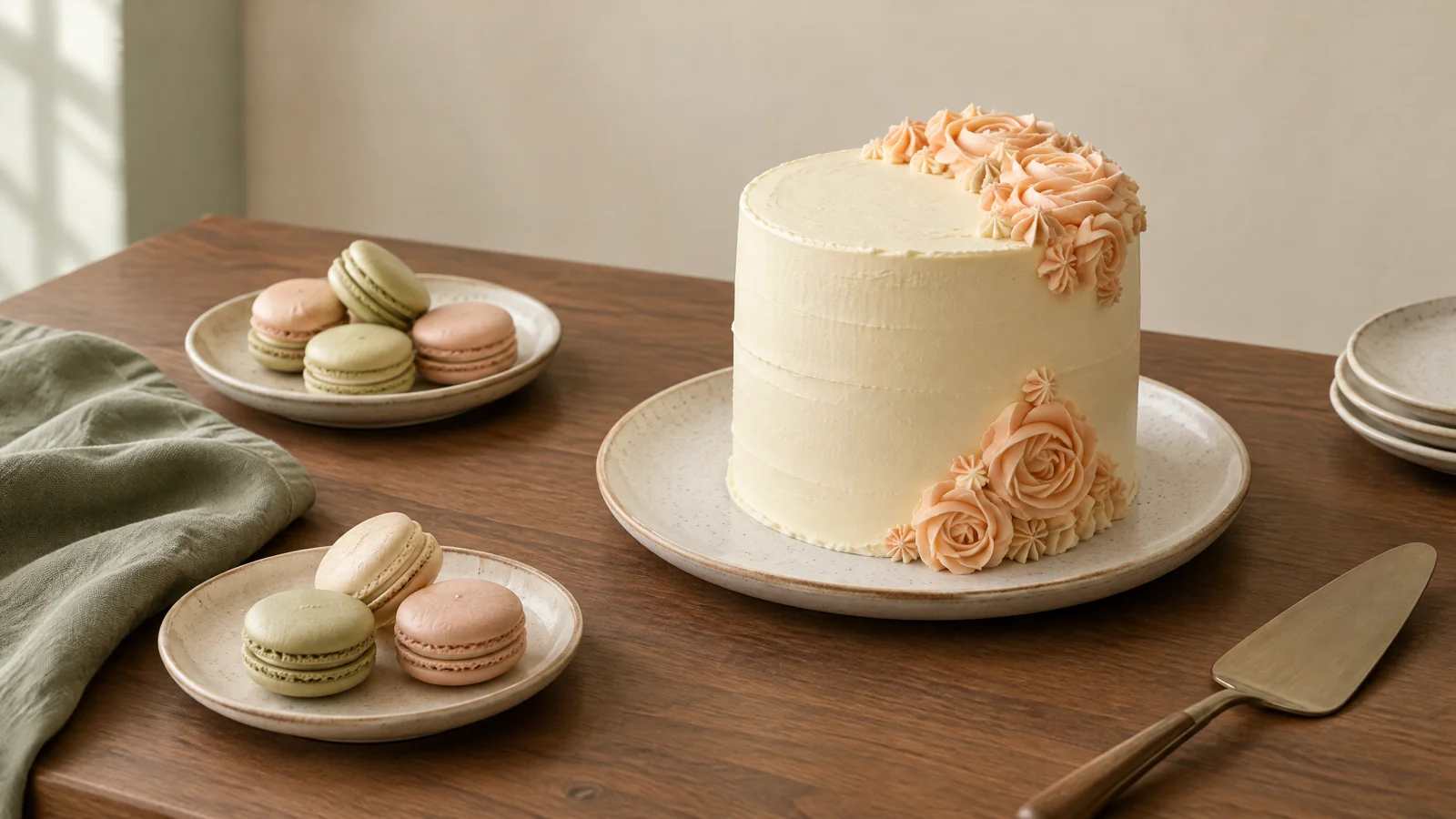
A beautiful workshop photograph can show a successful result without showing how it was achieved. The instructor might have prepared the cake layers, corrected the mixture or completed the difficult finishing step. None of that automatically makes the session poor value. It does mean that making something attractive and learning to make it again are different promises, and your booking should reflect the promise that matters to you.
For a birthday outing, an enjoyable shared activity may be enough. For someone hoping to bake at home, a less elaborate product with clear feedback may be the better choice. Canvas Blend's Hong Kong team-building and aesthetic experience guide provides a related starting point for group activities. Here, the practical question is narrower: which workshop gives you useful practice rather than just a finished object?
Before lightening through the mid-lengths and ends, read about balayage Hong Kong, assess your current hair condition, and leave time to discuss a simple at-home care routine.
01
What should you be able to do after a baking class?
Start with one action you want to perform without the teacher's hands taking over. That might be weighing ingredients, folding a mixture, shaping dough or piping a consistent border. A course described as covering many techniques may offer less practice of your chosen action than a simpler session. Write your goal as a sentence: 'I want to measure and mix this recipe myself,' rather than 'I want to become good at baking.'
Use YumYum's Baking Class page as a starting point for an enquiry about those actions, not as proof of a particular lesson structure. Request the actual recipe, the stages completed by participants and the stages prepared in advance. Availability, venue and the teaching arrangements for your proposed date need direct confirmation. A broad service title does not tell you how the session divides practice and demonstration.
Measurement is an especially useful beginner goal because it travels across recipes. Michigan State University Extension explains that measuring cups and the person using them can affect quantities, while ingredients measured with a scale are usually more accurate.[3] This supports asking whether you will practise weighing ingredients yourself. It does not mean owning a scale guarantees success, or that every workshop must teach the same measuring method.
A useful learning outcome includes a way to notice an error. Ask whether the teacher explains what to look for and gives you a chance to try again. Following instructions once can produce a good result without showing whether you understand the step. For a home baker, leaving with one recognisable technique and a correction to remember may be more valuable than leaving with several products you cannot reproduce.
Name one repeatable action, then ask how the lesson lets you practise and assess it.
02
When is decorating the right skill rather than baking from scratch?
Choose decorating when your real interest is finishing: controlling a piping bag, working towards a smooth surface or placing an original design. Using a prepared cake can leave more time for those actions. The trade-off is straightforward: you may learn how to finish a cake without learning how to mix, bake or judge the layers underneath it. That is a sensible specialisation when it is stated clearly.
YumYum's Cake Decorating Class is a relevant enquiry route if you want to compare finishing activities. Ask whether each person works on an individual cake and whether the teacher demonstrates before you practise. Also ask what happens if your first attempt is uneven. A design photograph cannot establish how much individual feedback or repeat practice is included, and neither should be assumed from a page title.
A decorative reference communicates taste, not the full production method. Canvas Blend's hair colour gallery serves a comparable role within its own field: it helps describe an aesthetic direction. For a cake workshop, explain which visual element interests you, such as a restrained palette or a simple border. Then translate that preference into the technique you want to learn rather than requesting an entire complex image as the lesson outcome.
Keep design ambition proportionate to the available practice. A beginner may learn more by repeating one border than by assembling an elaborate display under constant correction. Prefer original motifs, or confirm permission before using protected characters and logos. If edible finishing materials matter to your choice, obtain ingredient information separately; an attractive image cannot establish what a decoration contains or whether it suits a participant's dietary requirements.[2]
| Learning direction | Useful practice to request | Trade-off to accept |
|---|---|---|
| Baking foundations | Weighing, mixing and recognising the taught stage | A simpler finished item may leave more room for fundamentals |
| Cake finishing | Repeated piping or smoothing with individual feedback | Prepared layers do not teach cake baking |
| Everyday cooking | Ingredient preparation and the cooking actions you need | It may not develop pastry or decorating skills |
| Social workshop | Manageable tasks that everyone can take part in | A polished group result may not demonstrate independent ability |
03
Would a cooking class solve your actual kitchen problem better?
The right choice depends on what stops you using your kitchen now. If your difficulty is preparing an ordinary meal, a pastry workshop may be enjoyable but leave that obstacle untouched. If your ambition is to make cakes for family occasions, learning general meal preparation may miss the point. Choose the course whose practical tasks resemble the next thing you genuinely intend to make, rather than the activity that looks more sophisticated.
Consider YumYum's Cooking Class as an alternative enquiry when ingredient preparation or cooking a dish is closer to your goal. Ask which actions are taught and whether you perform them yourself. Do not infer particular knife exercises, equipment access or menu choices from the generic title. A useful response should identify the dish and your role in making it, not merely describe the experience as hands-on.
Consider this hypothetical choice: someone owns a small oven but rarely bakes, and mainly wants to prepare a reliable weekday dinner. The recommendation here would be to investigate a relevant cooking lesson first. Another person already cooks comfortably but wants to make a simple celebration cake has a stronger reason to investigate baking foundations. These are illustrative decisions, not accounts of YumYum customers or claims about its current syllabus.
The lesson title is less important than the sequence of tasks. Request a plain outline showing preparation, demonstration, participant work and finishing. A combined cooking-and-baking event can be appropriate for a social occasion, but spreading a short session across several unfamiliar tasks may not suit a focused learning goal. There is no need to collect the widest syllabus when one useful skill would solve the problem you brought to class.
04
How can an adult learner tell whether the session offers real practice?
Adults arrive with different kinds of experience. Someone who follows recipes regularly may still struggle with a specific finishing technique, while a confident decorator might have little experience making the underlying cake. Describe what you have actually done before. 'I have mixed a cake but never piped icing' gives a teacher more useful information than either 'beginner' or 'advanced', and helps expose a mismatch before you commit.
The Adult Baking Class page gives another route for discussing that starting point with YumYum. Ask about the proposed group's level, the instructor's relevant teaching experience and how feedback works in that particular session. Do not treat the word 'adult' as a qualification level or evidence of professional training. Attendance, any certificate and an assessed qualification are different things; ask what is actually offered rather than assuming equivalence.
A smaller group is not automatically better if everyone spends most of the session watching. Ask how work is allocated: will you measure your own ingredients, share a bowl, rotate through a station or complete only the final decoration? Sharing can suit a sociable outing, but it can hide gaps for a learner seeking independence. The key is whether you get to perform the action that motivated the booking.
Ask how corrections are delivered. An instructor repairing your product can help achieve an attractive result, while an explanation followed by another attempt may better support your learning goal. Neither approach is inherently wrong, but they provide different value. A first lesson should not be expected to establish professional competence. Judge it by whether you can describe the technique more clearly and identify what still needs practice afterwards.
If longer intervals between colour appointments appeal to you, read about babylights Hong Kong and discuss regrowth, upkeep, and your preferred level of brightness during consultation.
05
Will the technique still be useful in your home kitchen?
A workshop result belongs to a particular setup. Before booking, compare the tools used in the lesson with those you can reasonably access at home. Ask whether the recipe sheet identifies essential equipment and whether any method taught depends on machinery you do not own. A course can still be worthwhile as an experience, but home repeatability becomes a weaker reason to choose it if reproducing the work requires major new purchases.
Look beyond the recipe itself. You will want to know which steps were completed before arrival, which decisions the instructor made for you and whether the notes explain the cues demonstrated in class. A written ingredient list cannot replace missing instruction. Where weighing is part of the method, check that the units and measurements are clear; the MSU guidance supports weight measurement as a generally more accurate approach, not a promise that different equipment behaves identically.[3]
For a second hypothetical example, imagine choosing between a highly decorated cake lesson and a simpler session in which you measure and mix a recipe yourself. If your aim is to repeat the work in a modest home kitchen, the simpler session would be the recommendation here if its equipment and instructions match your setup. If your aim is an enjoyable birthday activity and a display piece, the decorating session may be the more honest choice.
Plan a modest follow-up attempt rather than a celebration order immediately after your first lesson. Repeating the taught task lets you discover where the teacher's help was important. Keep the recipe's stated method and any safety instructions intact, and ask about uncertainties instead of improvising substitutions for medical or dietary needs. A successful class should give you a useful starting point, not an obligation to turn one workshop into a complicated new hobby.
06
Which safety questions must come before the creative brief?
Food safety should be part of the lesson, even when the activity looks like harmless play. The FDA states that most flour is raw and has not been treated to kill bacteria; it advises against tasting raw flour, dough or batter.[1] This matters even if a mixture contains no raw egg. Ask how the workshop keeps raw preparation separate from tasting, and follow the instructor's safe handling instructions rather than copying a photograph or video trend.
Allergen questions require more than choosing a recipe name. Hong Kong's Centre for Food Safety identifies ingredients including milk, eggs, cereals containing gluten, nuts, peanuts and soy as potential allergens, and calls for preventing unintended transfer to food or cutlery.[2] Ask for the actual ingredient information and an explanation of shared utensils and work areas. A recipe described as vegan or made without one ingredient is not evidence that every relevant allergen is absent.
For a participant with a severe allergy or another personal medical dietary requirement, discuss suitability with an appropriately qualified healthcare professional and obtain concrete information from the provider before booking. This guide cannot decide whether a particular kitchen is safe for that person. If the provider cannot clearly explain ingredients and cross-contact arrangements, do not fill the gap with reassurance from images, marketing terms or the fact that another participant attended successfully.
For a group activity, gather essential dietary and participation requirements privately before choosing the product. Some people may want to join the making but not eat the result. Confirm whether that arrangement is feasible rather than using tasting as the only way to participate. Food hygiene arrangements, equipment supervision and take-home handling instructions should be clarified alongside the creative tasks. A visually successful event is not a substitute for a workable plan for everyone attending.
- State one technique you want to perform independently and your relevant starting experience.
- Request the recipe and a stage-by-stage outline identifying participant work and advance preparation.
- Ask about individual practice, shared equipment and opportunities to repeat a corrected technique.
- Compare the essential tools and written instructions with your home setup.
- Confirm actual ingredients, allergen cross-contact arrangements and safe tasting rules before deciding.
- Obtain the venue, date, duration, take-home instructions and payment or cancellation terms in writing.

07
How should the class fit a celebration without becoming another task?
For a wedding-related outing or birthday, decide whether learning or social time is the priority before adding other appointments. Someone who wants sustained instruction may prefer a separate date from a busy celebration schedule. If the event also involves salon planning, Canvas Blend's bridal hair colour guidance belongs to that separate conversation. It should not be treated as baking advice or evidence that a workshop suits the same timetable.
Keep the bookings and budgets distinct. Canvas Blend's pricing information concerns salon services, not a YumYum course fee. Ask each provider for its own written scope and terms instead of assuming a package exists. For the workshop, useful quote details include the teaching activity, materials, any take-home packaging and what changes if someone cannot attend. This article does not verify a merchant's headline price, rating, availability or refund promise.
Choose a result that fits what happens after the activity. If participants will continue to another venue, ask the provider how the finished food should be handled and whether your planned journey is compatible with its instructions. Do not assume every decorated item can wait unrefrigerated through a long celebration. The practical answer may be to simplify the plan or schedule the workshop separately, rather than making safe handling depend on an optimistic itinerary.
The strongest final choice is the one whose trade-off you can state plainly. You might accept prepared layers to spend more time decorating, or choose a modest product to practise foundational work. You might even choose a social session with no ambition to bake independently afterwards. Ask for clarification whenever the proposal blurs these goals. A good booking decision is not the most elaborate one; it is the one that matches your intended use of the experience.
What else should you ask about celebration planning and everyday aesthetics?
Is a more impressive finished cake evidence of a better class?
No. A photograph does not show which stages you performed or how much the instructor corrected. Compare your practice and feedback with your learning goal instead.
Can a decorating class be worthwhile if the cake is prepared in advance?
Yes, if finishing is the skill you want. Prepared layers can make room for decorating practice, but that lesson should not be mistaken for learning to bake the cake itself.
Should I choose baking if I mainly want to make weekday meals?
Investigate a cooking lesson whose actual dishes and tasks match that goal. Baking may still be enjoyable, but it need not solve the kitchen problem you want to address.
Does an adult workshop certificate mean professional competence?
Do not assume so. Ask whether any document records attendance or an assessed qualification, who issues it and what it represents. This guide does not verify a qualification offered by a provider.
Is egg-free dough safe to taste during class?
Not simply because it has no egg. The FDA warns that raw flour, dough and batter can make people ill and advises against tasting them.[1] Follow safe handling and tasting instructions.
Can a vegan or gluten-free label settle an allergy concern?
No. Confirm actual ingredients and relevant cross-contact arrangements.[2] People with severe allergies or personal medical dietary needs should seek qualified professional guidance rather than relying on a recipe name or photograph.
How can you organise styling and supplier arrangements separately?
Before sending an enquiry, name the skill, the next occasion when you would use it and the equipment you have available. Then request a lesson outline that shows your own practical work. If the reply mainly describes the finished product, ask again about the technique. Choosing a simpler outcome can be a confident decision when it leaves more room for the practice you actually want.
For a wider celebration plan, use Canvas Blend's salon booking page only for the hair-service part and confirm workshop arrangements separately with YumYum. This is an AI-assisted Canvas Blend editorial guide; Canvas Blend and YumYum share ownership, so it is not an independent third-party review. The examples are hypothetical. No food or floristry expertise, authorship or review by Vit So is claimed, and merchant ingredients, availability and written terms require direct confirmation.
Before choosing a new colour, review hair colour price Hong Kong alongside your hair length, density, and preferred technique so you can plan the appointment with clarity.
Sources, shared ownership and editorial notes
- [1] FDA — Flour Is a Raw Food and Other Safety Facts
- [2] Hong Kong Centre for Food Safety — Food allergens
- [3] Michigan State University Extension — Kitchen scales are a valuable tool
This AI-assisted guide is produced by Canvas Blend Editorial. It is a celebrations and everyday aesthetics guide, not a real-client, food-tasting, product-use or event record, and not an independent review. Canvas Blend and YumYum share the same owner; resource links are not independent third-party endorsements. It is not personally written by Vit So or reviewed by him as a food, baking, nutrition or floristry expert; his real salon background does not establish qualifications in those fields.
Obtain written confirmation from the supplier for service scope, delivery dates, food ingredients, allergens and cross-contact risks, product or supplier certification, actual availability and applicable terms. Images and general guidance are not evidence of these details. Discuss individual food allergies or health needs with a qualified medical professional. This page promises no price, discount, stock, refund or cancellation arrangement and does not describe external services as a joint salon package. Quotes, deposits, amendments and cancellation/refund arrangements depend on the supplier’s current written terms and individual confirmation.
AI-assisted Canvas Blend editorial guidance. Canvas Blend and YumYum share ownership; this is not an independent third-party review or a report of personal attendance. All scenarios are hypothetical. No food or floristry qualifications, authorship or review are attributed to Vit So. Confirm lesson content, teaching arrangements, venue, availability, ingredients, certification if relevant, and payment or cancellation terms directly with the provider.
More Celebrations & Everyday Aesthetics Guides

Macaron Wholesale: Comparing Trays, Gift Boxes and Complete Quotes
Compare macaron trays, boxed gifts and complete wholesale quotes without confusing pieces with packs. Use this guide to prepare a precise supplier enquiry.
Macaron Dessert Table: Reserve Gifts Without a Sparse Display
Plan a macaron display without spending your gift stock twice. Compare serving formats, reserve boxes and prepare a clear Hong Kong event brief.
Easter Cake Gift Box: Build a Seasonal Ordering Calendar
Plan Easter, Mid-Autumn and Christmas bakery gifts with reusable checkpoints, storage decisions and clear approvals. Build your seasonal calendar.