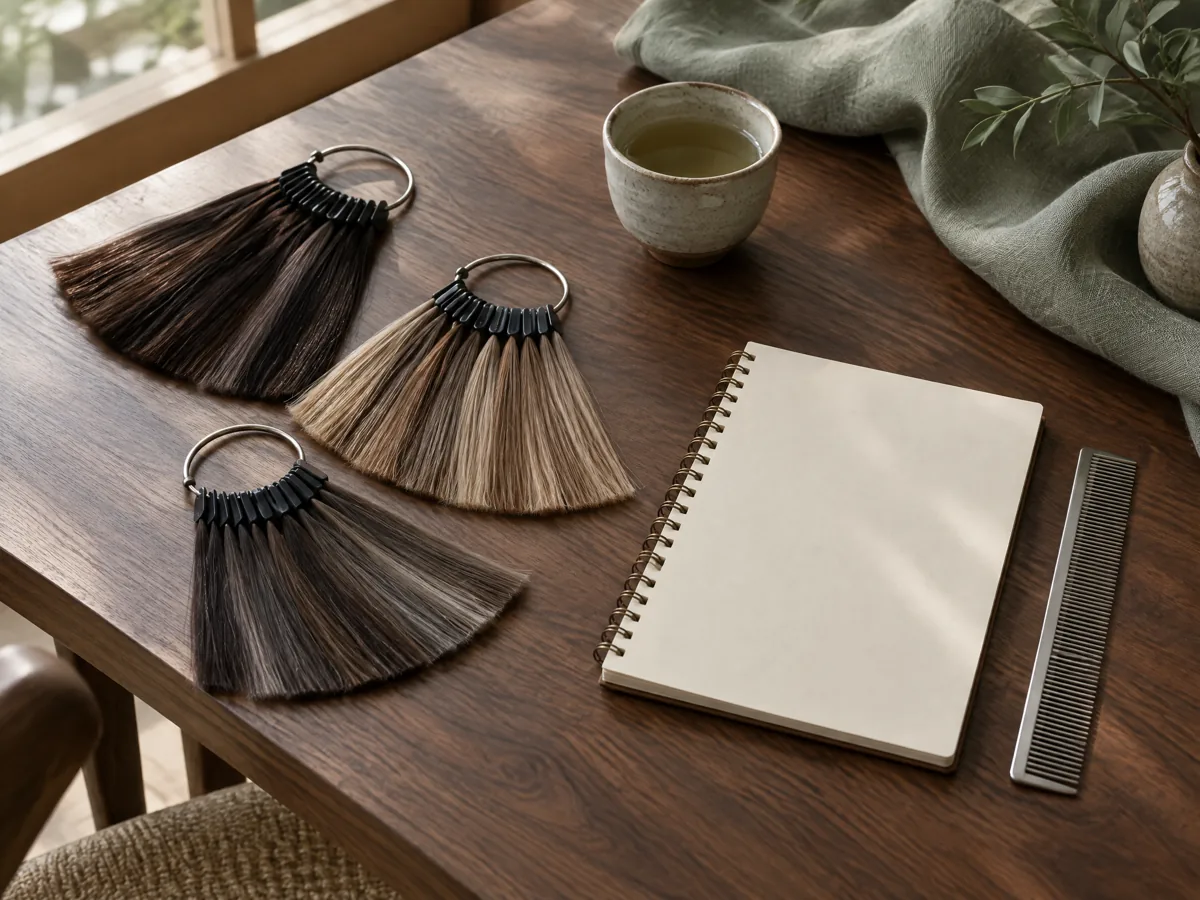
Catering × Gifts × Cakes × Floristry × Occasion Styling
Rose bouquet portraits: how to choose colour and shape
Browse original Traditional Chinese celebrations and everyday aesthetics articles →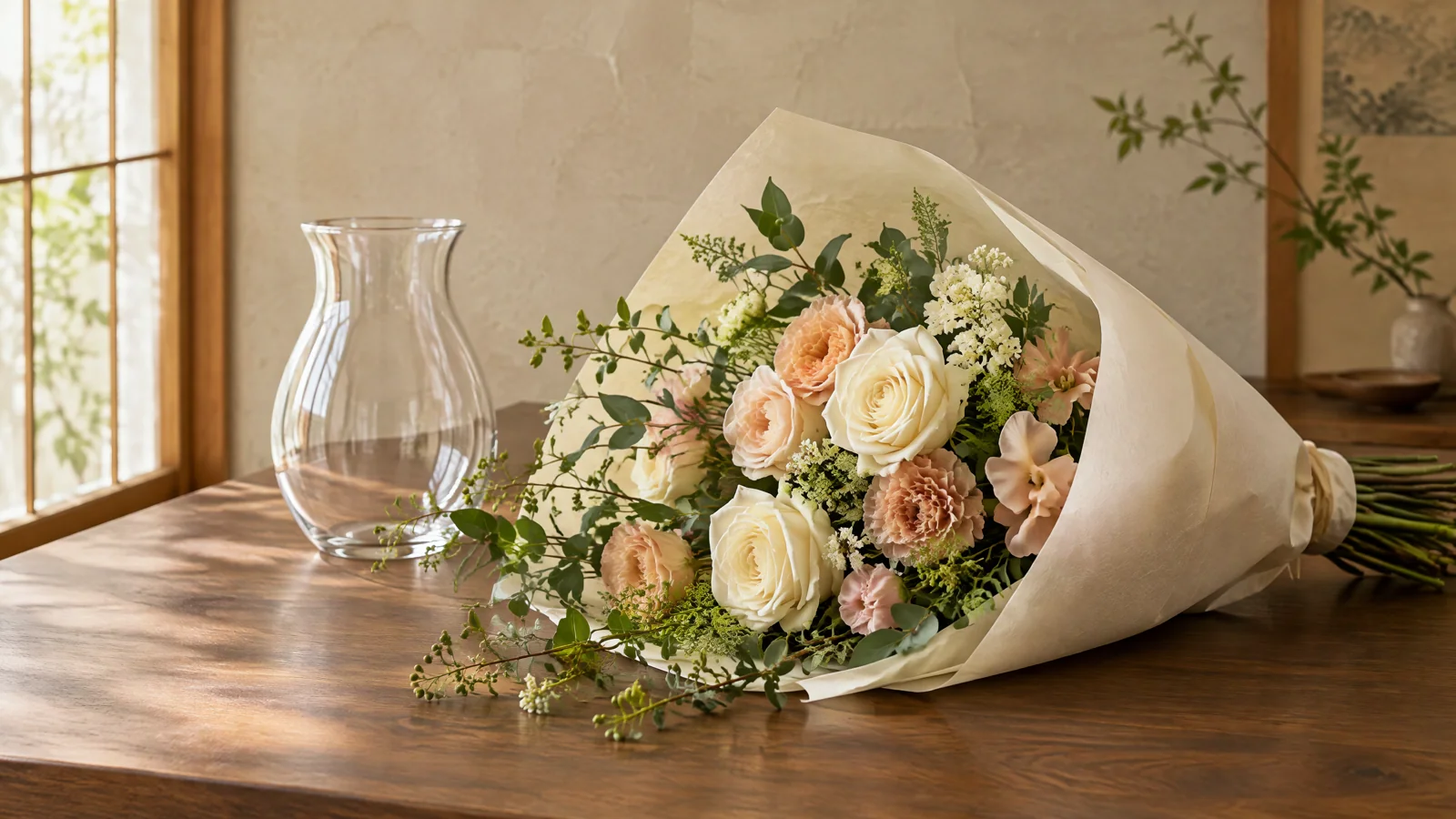
Choose a rose bouquet by deciding whether the person or the flowers should be the first thing noticed, then match the palette and silhouette to that priority. For a person-led portrait, start with restrained colour and a shape that leaves the face, neckline and hands visible; for a flower-led celebration, allow stronger contrast but test the bouquet in the intended frame before committing.
A bouquet can look beautiful on a product page yet feel wrong when somebody holds it. The finished portrait includes clothing, hair, skin, background and wrapping, not just petals. Rather than searching for the most impressive arrangement in isolation, decide what the photograph needs to communicate: a quiet anniversary, a proud graduation or a wedding portrait with a clear view of the outfit.
This guide treats flowers as part of a visual composition, not as a formula for flattering particular skin tones. Preferences and the actual light matter more than rigid colour categories. Canvas Blend's role is to help readers connect celebration styling with thoughtful aesthetic choices. Flower selection, conditioning and order fulfilment remain matters to discuss with the florist, while the photographer decides how to capture the final scene.
If you are planning a change of colour, learn about hair colour Hong Kong before your consultation and consider the techniques, tones and upkeep that suit your routine.
01
What should a rose bouquet do in your portrait?
Start by writing one sentence about the picture you want. 'A relaxed portrait of us, with flowers as a small anniversary detail' leads to a different choice from 'a bold image celebrating the gift itself'. Neither is superior. The useful distinction is whether the bouquet supports the person or becomes a second main subject, because that decision affects colour, width and where it is held.
For a person-led image, our editorial starting point is a compact arrangement held below the neckline, with enough space to see the hands. A wider silhouette can work when the whole outfit is visible, but may occupy most of a close crop. Ask for the finished width including the wrapping rather than assuming a particular stem count will produce the right proportion.
The Y. Florist rose bouquet page provides a merchant reference for discussing colours and presentation. Use it to communicate a direction, not to establish the exact appearance of a future order. Ask how open the roses are expected to be at the photography time and whether the finished arrangement can be shown from the front and side before you collect it.
For hair and outfit references, browse Canvas Blend's hair colour gallery and select an image for its overall mood rather than demanding identical colours across every element. A softly dimensional hairstyle and a tightly packed floral dome create different textures. Decide whether that difference feels intentional, and keep the face visible instead of placing the bouquet against the chin simply to fit everything into the frame.
02
Which colour relationship suits your finished look?
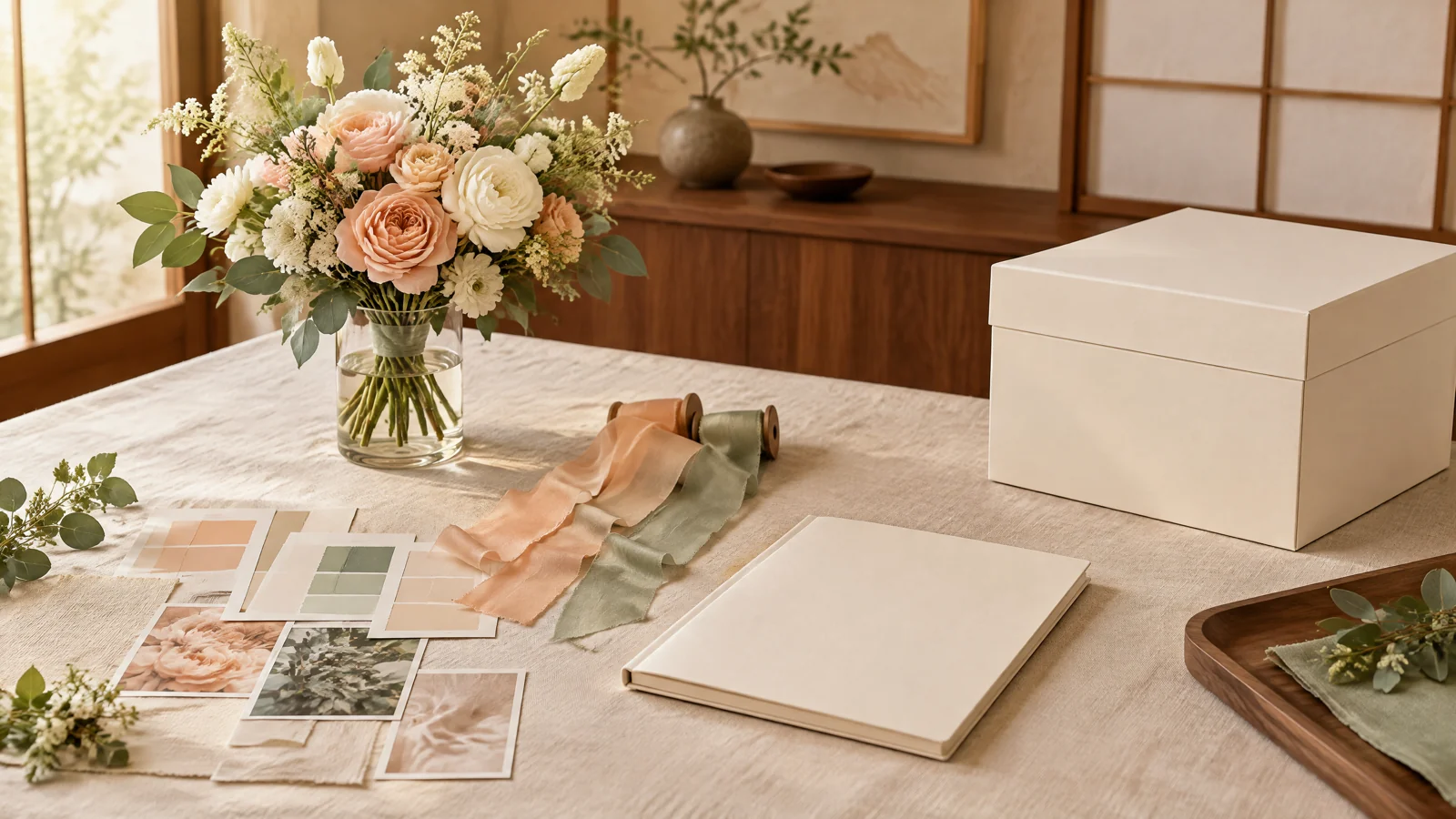
There are three useful starting directions: stay within one colour family, use neighbouring hues, or introduce a contrasting accent. Adobe describes analogous colours as neighbours on the colour wheel and complementary colours as opposites. These are tools for organising a palette, not rules about which flowers every person must wear or carry. Choose the relationship first, then judge the actual materials together. [1]
A tonal approach might combine dusty pink roses with a rose-toned outfit and subdued wrapping. The benefit is continuity; the cost is that the flowers may become difficult to distinguish from the clothes. Instead of adding another strong hue immediately, try a difference in lightness. Pale petals against a darker garment can create separation while keeping the overall colour family restrained.
A contrasting approach might use yellow accents beside a violet garment. That gives the flowers a clearer identity, but it can also make them compete with the face. If you want a strong accent, keep other elements quieter. Adobe's colour wheel tool can generate complementary palettes from a base colour; it is a planning aid, not a guarantee that a screen swatch will match living petals. [3]
Hair colour should be an existing part of the brief, not something changed merely to match flowers. If you are already considering balayage, bring the outfit and bouquet references to the hair consultation so you can discuss the visual direction separately. A floral palette should accommodate your chosen look; it should not create pressure to undertake a colour service you otherwise do not want.
The same applies to highlights: use the service page to start a hair-specific conversation rather than infer that a flower photograph predicts the result. For the bouquet itself, send a reference showing what you dislike as well as what you like. 'No vivid orange against this blue-grey jacket' is more actionable than a broad request for an elegant arrangement.
| Direction | Useful effect | Main trade-off | What to test |
|---|---|---|---|
| One colour family | A connected, restrained scene | Petals may merge with clothing | Lightness difference between flowers and outfit |
| Neighbouring hues | Variation without a stark colour opposition | Too many similar accents can look busy | Whether one hue clearly leads |
| Contrasting accent | A distinct floral focal point | Flowers may compete with the face | A smaller accent within quieter wrapping |
| Neutral wrapping | Fewer competing colours | Very pale paper may dominate a dark outfit | The wrap's visible area in the final crop |
03
When does a sunflower change the portrait's focus?
Compare flowers by the shape visible in the picture, not just their names. A cluster of small rose heads creates repeated detail. A conspicuous sunflower head can act as one large visual accent. If you want the bouquet to read clearly in a wider graduation photograph, that accent may suit the brief; if you want an intimate close portrait, it may feel disproportionately prominent.
The Y. Florist sunflower bouquet page is a useful merchant starting point for comparing head scale, supporting foliage and wrapping. Ask which flower sizes and colours are actually available. Do not assume every sunflower is the same yellow or diameter, or that a reference image proves the precise flower mix you will receive.
Imagine, as a hypothetical decision example, a graduate wearing a black gown with a violet hood. One prominent yellow floral accent could give the picture a clear celebratory focus. A large yellow cluster with bright blue wrapping would create several competing areas instead. If the graduate wants the hood and expression to lead, reduce the floral accent or simplify the wrap rather than automatically enlarging the bouquet.
This is a compositional recommendation, not a universal statement about sunflower symbolism. A recipient may prefer roses regardless of what appears most graphic in a photograph. Personal meaning should take priority when flowers are also a gift. Resolve that conflict by taking a separate bouquet-detail image, allowing the main portrait to stay person-led without treating the recipient's preferred flowers as a mistake.
04
Would tulips offer a better silhouette than roses?
Tulips deserve consideration when you prefer visible stems and a less tightly packed outline. That does not make them automatically more minimal: a full bundle with oversized wrapping can still occupy substantial space. Look at the complete arrangement and decide whether its outer shape supports the pose. A narrow upright form may fit beside a jacket, while a low rounded arrangement may suit a portrait with both hands together.
Compare the Y. Florist tulip bouquet reference if your brief values a looser outline. Discuss the actual variety and whether the design is intended to look structured or relaxed. The RHS notes that soft-stemmed flowers with heavy heads, including tulips, are prone to bending. That makes the expected silhouette at shooting time a useful question for the florist. [2]
The practical trade-off is between a shape you can plan tightly and a natural outline you are willing to accommodate. If a shoot requires repeated, nearly identical poses, tell the florist and photographer. If gentle irregularity is welcome, leave room around the stems and heads in the composition. Neither approach requires a claim that roses are always rigid or that tulips will bend in a predictable direction.
You can also preserve the recipient's preferred flower while adjusting presentation. Before switching from roses to tulips, ask whether less wrapping, fewer projecting leaves or a narrower arrangement would solve the problem. Changing the flower species is a larger decision than changing the visual footprint. Treat the reference as evidence of your taste, not as an instruction to reproduce a picture regardless of availability or handling needs.
After browsing PMQ or Hollywood Road, readers can use the local overview of hair salon Sheung Wan to coordinate a colour consultation with shopping, work, or weekend plans.
05
How do you test wrapping, scale and light together?
Make a simple preview before the order is final. Wear the intended outfit and hold a paper shape roughly matching the proposed wrapped width. Take the planned close and wider frames. This does not imitate flower texture, but it answers a basic question: does the arrangement hide something important? If the jacket fastening, neckline or hand position disappears, change the size or pose before debating subtle petal colours.
Once a floral reference is available, compare it with the outfit in the same viewing conditions. A photograph taken under warm indoor lamps is a poor basis for an exact match to clothes viewed beside a window. Where practical, make a quick test in light similar to the session. Ask the photographer to assess the result rather than promise that a particular colour will always look flattering.
Wrapping deserves its own decision because it may occupy more of the frame than expected. Black paper can give pale petals definition yet form a large dark block against a light outfit. White paper can look restrained in isolation yet draw attention beside dark clothes. A matte, simpler wrap is our starting recommendation when the face should lead, but the final choice should survive an actual preview.
Inspect the crop in which the portrait will be used. A full-length picture for a printed album and a tight vertical image for a phone screen do not give the bouquet equal space. Ask for room around the outer edge if several crops are needed. Do not compensate for an awkward crop by holding flowers higher and obscuring the face; take a dedicated flower image instead.
Do the preview without leaving fresh stems dry through a long rehearsal. The RHS recommends conditioning cut flowers in clean water in a cool place and keeping displayed arrangements away from heat. Build the photographic test around that care rather than treating the bouquet as a prop that can wait indefinitely. There is no guaranteed holding period: flower condition and the real environment still matter. [2]
06
What belongs in a florist's photographic brief?
A photographic brief should explain the intended image before it lists flower preferences. Describe the outfit, background and whether the flowers are supporting detail or the main feature. Add the most important crop and a reference for the desired silhouette. This lets the florist discuss a suitable presentation without interpreting 'large', 'soft' or 'luxurious' as though those words have fixed dimensions.
Use the Y. Florist Hong Kong florist page as an enquiry route, while confirming the specific arrangement and service directly. Explain the photography time as well as the handover window. A delivery description does not guarantee arrival for the first frame, and a district reference does not establish a permanent branch or collection point. Get the actual handover details in writing.
Prioritise substitutions by visual role. If colour and outline matter more than the cultivar, say so; if a particular rose has personal significance, make that the non-negotiable element. Ask what happens if it cannot be sourced. The strongest brief allows useful flexibility while naming the changes that require your approval, rather than giving blanket permission to replace anything described as similar.
Compare the quotation by what is included: flower specification, finished presentation, any container, transport arrangements and requested adjustments. Do not equate a larger rose count with a better portrait or assume an online price covers the photographic brief. Request the final terms for your order. Visual references, including AI-generated ones where labelled, are not proof of exact stock, dimensions or a guaranteed finished result.
- State whether the main portrait should lead with the person or the flowers.
- Attach the outfit and background references, naming colours you want to avoid.
- Request the finished floral and wrapped width, plus a front and side view where possible.
- Specify the important crop and whether hands and neckline must remain visible.
- Name acceptable substitutions and the changes that need your approval.
- Confirm photography time, handover arrangements and flower-specific care instructions.
07
How should flowers and hair appointments be coordinated?
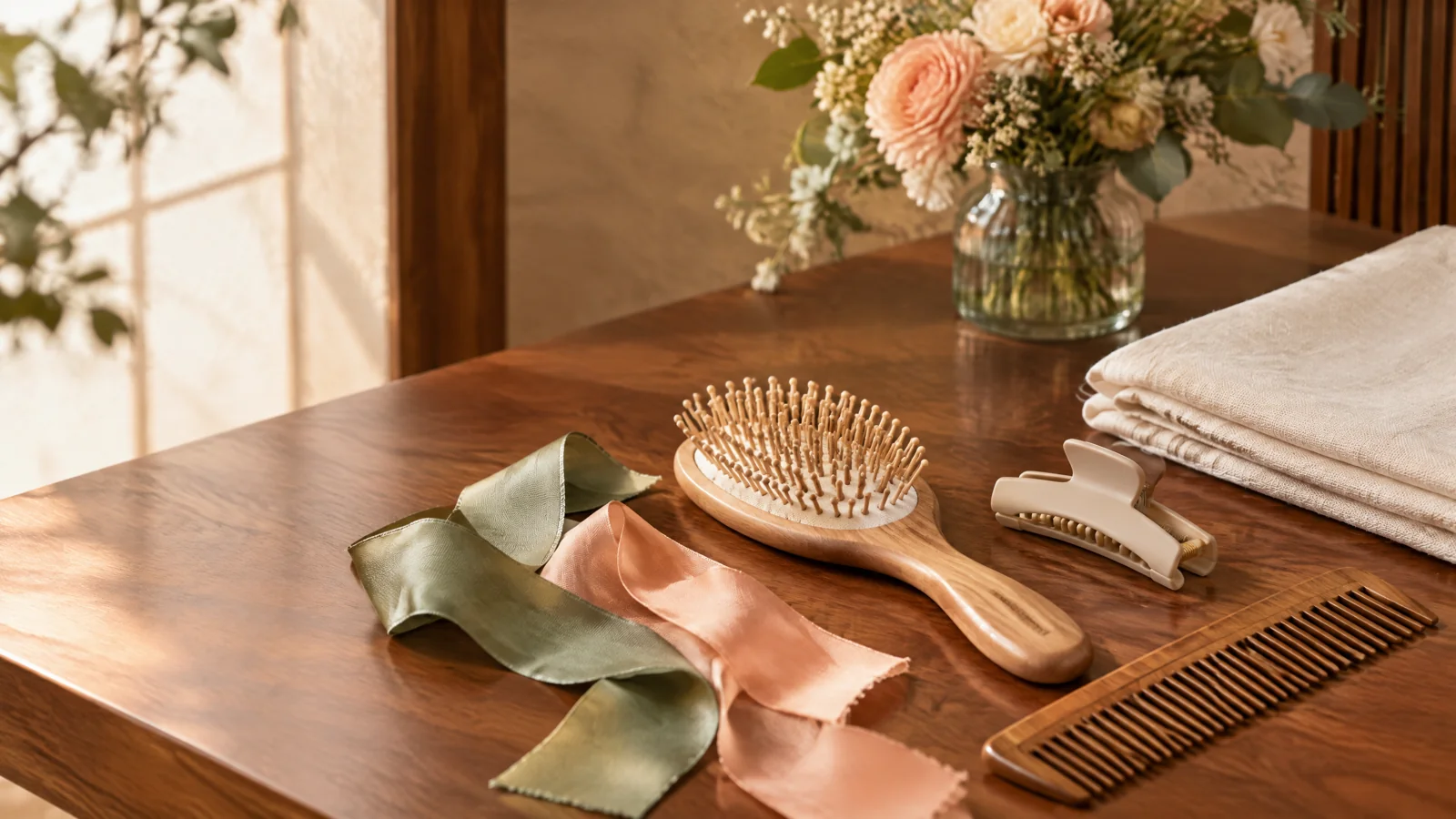
For a wedding or anniversary session, use one visual reference across the team but keep responsibilities separate. Canvas Blend's bridal hair colour planning is a relevant starting point if hair colour is already part of your preparation. Share the outfit and floral direction with the salon; ask the florist about flower condition and handling; ask the photographer about framing. Coordination does not make any one provider responsible for all three.
If you want a hair consultation, use the booking page to enquire about the service and suitable preparation. Do not assume a last-minute colour change is necessary to rescue a floral palette. Often the more proportionate adjustment is quieter wrapping, a different accent colour or another photographic background. Keep the hair decision tied to your preferences and professional consultation rather than a single reference photograph.
Plan a place for the flowers between photographs. The RHS recommends clean vases, removal of foliage below the waterline, suitable cut-flower food and a cooler position away from heat and ripe fruit. Ask the florist how those general principles apply to the finished bouquet and any transport packaging. Do not assume a tied or wrapped arrangement can be dismantled without changing its intended structure. [2]
Finish with two photographs if the priorities conflict: one showing the person clearly and one celebrating the bouquet's colour and texture. This is often a better compromise than forcing a large floral gift into every portrait. The successful choice is not the flower with the grandest description; it is the arrangement that respects the recipient, fits the intended frame and can be handled sensibly on the day.
What else should you ask about celebration planning and everyday aesthetics?
Should a rose bouquet match my hair colour exactly?
No. Treat hair, clothing and flowers as one scene, but choose whether you want continuity or contrast. An exact match can make elements merge. Compare the actual outfit and floral direction in suitable light, and keep any hair service decision separate.
Are pale roses always the best choice for portraits?
No. Pale flowers may separate well from dark clothing but blend into a pale outfit or background. Choose by the complete frame and the intended focal point, not by a universal rule about pale colours.
How many roses should I order for a close portrait?
There is no reliable count-only answer. Flower size, opening stage, foliage and wrapping all change the footprint. Request the finished dimensions and test a similar-sized paper shape in the planned crop.
When are sunflowers a better option than roses?
Consider them when you want a distinct floral accent in a wider celebratory portrait. Check actual head size and colour availability. For a person-led close crop, compare a smaller accent or a quieter arrangement rather than assuming bigger flowers are better.
Will tulips keep the same outline throughout a session?
Do not rely on an unchanged outline. The RHS identifies tulips among soft-stemmed flowers prone to bending. Discuss conditioning and the expected shape with the florist, and leave compositional flexibility if a relaxed silhouette is part of the brief. [2]
Does a merchant reference photo guarantee the bouquet I receive?
No. Use it to communicate palette and shape, then confirm current flowers, finished presentation, substitutions and order terms. Where a reference is AI-generated, it remains an illustration rather than evidence of a completed order or available stock.
How can you organise styling and supplier arrangements separately?
Choose the portrait's priority first, then narrow the bouquet to a palette and footprint that support it. Test the wrapped shape against the outfit before insisting on a specific flower count. If a beloved flower creates a stronger focal point than intended, keep the gift meaningful and take a separate floral-detail picture instead of sacrificing a clear view of the person.
Your next step is a concise photographic brief with an outfit reference, the important crop and the changes that require approval. Confirm the actual arrangement and handover with the florist, while discussing hair colour and photography with their respective providers. A coordinated result comes from clear decisions, not from assuming that matching colours or shared ownership creates a combined service guarantee.
While comparing hair colour salon Central, consider a colour appointment that accounts for professional presentation, travel plans, and root maintenance, with a location convenient for journeys from Central.
Sources, shared ownership and editorial notes
- [1] The color wheel explained and how colors work together — Adobe Express
- [2] Cut flowers: cutting and conditioning — RHS Advice Guide
- [3] Color palette generator and color wheel tool — Adobe Color
This AI-assisted guide is produced by Canvas Blend Editorial. It is a celebrations and everyday aesthetics guide, not a real-client, food-tasting, product-use or event record, and not an independent review. Canvas Blend and YumYum share the same owner; resource links are not independent third-party endorsements. It is not personally written by Vit So or reviewed by him as a food, baking, nutrition or floristry expert; his real salon background does not establish qualifications in those fields.
Obtain written confirmation from the supplier for service scope, delivery dates, food ingredients, allergens and cross-contact risks, product or supplier certification, actual availability and applicable terms. Images and general guidance are not evidence of these details. Discuss individual food allergies or health needs with a qualified medical professional. This page promises no price, discount, stock, refund or cancellation arrangement and does not describe external services as a joint salon package. Quotes, deposits, amendments and cancellation/refund arrangements depend on the supplier’s current written terms and individual confirmation.
This is an AI-assisted Canvas Blend editorial guide. Canvas Blend and YumYum share an owner, so this is not an independent third-party review. The graduate example is hypothetical, not a real client account. The visual recommendations are editorial suggestions, not floristry credentials; this article does not claim that Vit So is a florist, its author or its reviewer. Confirm flower availability, substitutions, dimensions, pricing, handover arrangements and written terms directly with the merchant. Hair colour advice and bookings are separate salon services.
More Celebrations & Everyday Aesthetics Guides
Grand opening flower basket: design for a working business space
Choose an opening flower basket that fits your entrance, brand and working day. Use our space-first brief to discuss size, placement and care with a florist.
Condolence flowers: Keep Funeral and Wedding Orders Clear
Choose sympathy flowers without mixing funeral and wedding instructions. Use our order checklist to confirm family wishes, wording and handover details.
Corporate floral subscriptions: who owns the office care duties?
Compare office flower subscriptions, artificial displays and orchids by care duties, not labels. Use a practical handover checklist before enquiring.