Catering × Gifts × Cakes × Floristry × Occasion Styling
3D Cake or Letter and Number Designs: How to Brief the Shape
Browse original Traditional Chinese celebrations and everyday aesthetics articles →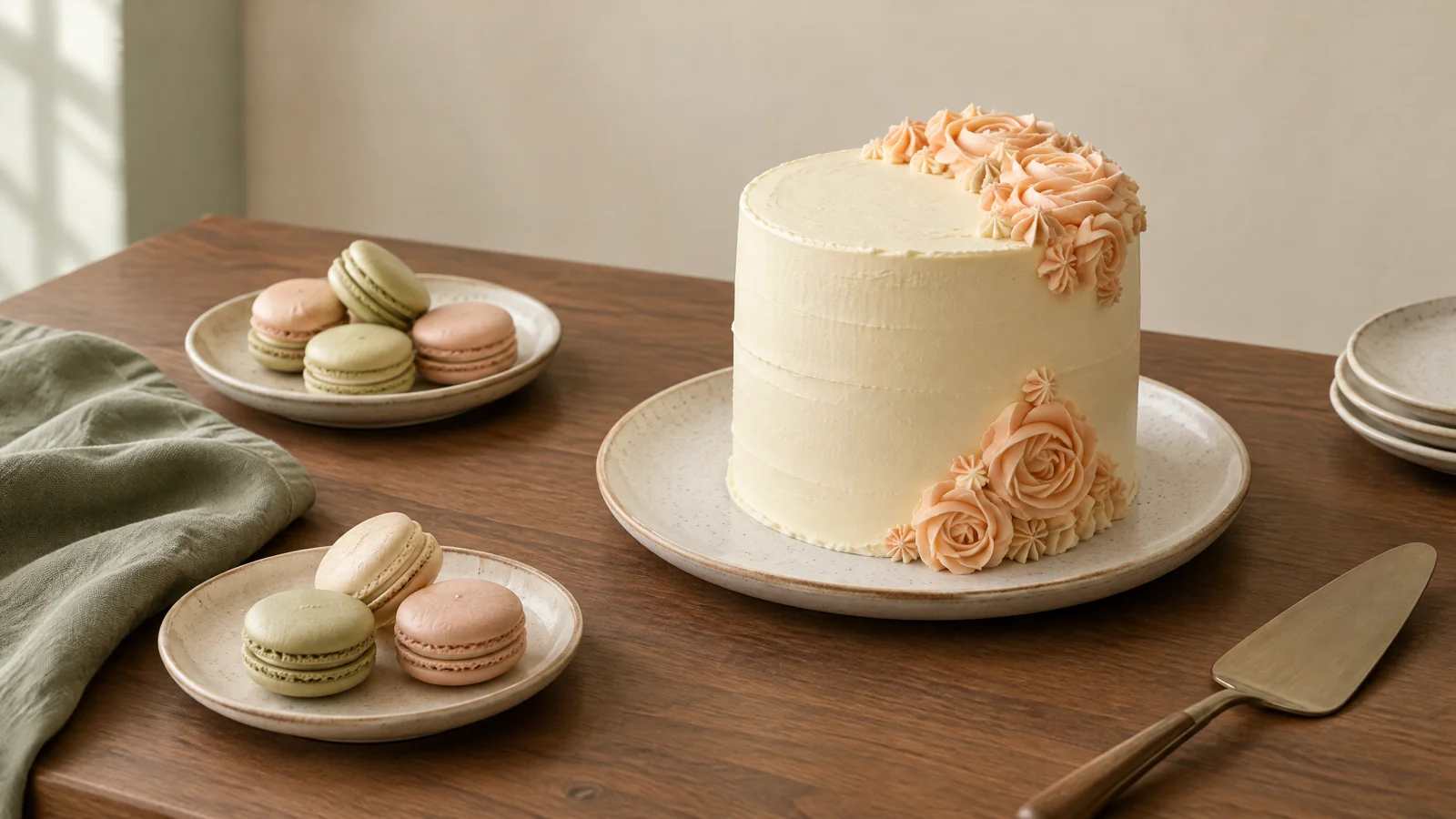
Choose a sculpted cake when the object itself carries the celebration's meaning; choose a letter or number when the message needs to be read immediately. Brief the main viewing angle and the cutting plan before choosing surface details, because an impressive silhouette is not automatically an easy cake to display or share.
A cake shaped like a favourite object, an initial or a milestone can make a celebration feel personal without a long written message. The difficult part is deciding what must survive the move from reference image to actual cake. A beautiful overhead photograph may hide a design that looks unclear from the seated guests' view.
For a Hong Kong birthday dinner, wedding gathering or workplace celebration, the useful question is not which design looks most elaborate. It is which shape communicates the right thing in the room you have. A compact sculpted object might suit a close group, while a broad letter arrangement might communicate more clearly across a display table.
This Canvas Blend guide treats the cake as one part of an event's visual planning, not as a test of pastry expertise. Start with a main viewing angle and a simple description of what guests should recognise. Then ask the baker to explain how that concept becomes an edible product, a transportable package and portions people can actually receive.
If you are planning a change of colour, learn about hair colour Hong Kong before your consultation and consider the techniques, tones and upkeep that suit your routine.
01
What should a sculpted cake communicate at first glance?
A sculpted design uses its overall form to suggest an object rather than relying only on decoration on a standard cake. For an enquiry about a 3D Cake, name the object and the feature that makes it recognisable. A camera, for example, may need a clear lens profile more than tiny buttons or a realistic brand label.
Define the main view explicitly: front-facing on a table, seen from above, or photographed beside the recipient. These are different design tasks. A projecting detail might matter in a side photograph but disappear when guests look down. Ask for a sketch that shows the intended view, rather than assuming a single inspiration photograph explains the whole object.
Separate the essential outline from the optional details. Write that the lens must read clearly, the body can be simplified, and the surface pattern is negotiable. This gives the baker room to propose a feasible version without losing the reason you chose the object. It also helps you judge substitutions by meaning rather than by how many decorative pieces remain.
Canvas Blend's visual gallery offers a useful parallel for anyone already planning an event look: a close-up and a whole-person photograph answer different questions. Apply that distinction to the cake. Request enough visual information to assess its silhouette and table presence, while recognising that a design reference is not evidence of ingredients, construction or an available finished product.
| Design direction | Best reason to choose it | Compromise to settle first |
|---|---|---|
| Sculpted object | The recipient recognises a meaningful object | Which details can be simplified without losing recognition? |
| Low-profile sculpted scene | A front-facing motif matters more than a fully realistic object | Does it still read from the actual guest viewpoint? |
| Single letter | An initial conveys a personal connection | Will the chosen letterform remain clear after decoration? |
| Number arrangement | The numeral itself is the intended message | Has the recipient agreed to display that milestone? |
| Simple cake with a separate motif | Easy portioning takes priority over an edible sculpture | Which elements must be removed before serving? |
02
Does the surface finish need to support realism or just colour?
A finish should serve the design rather than become a default upgrade. When considering a Fondant Cake, ask what the covering contributes: a smooth colour field, a sharp visual edge or a base for specific decoration. Do not assume that the category name tells you the filling, the thickness of the covering or how the finished cake must be stored.
Distinguish colour accuracy from object realism. A restrained two-colour design might communicate a camera clearly without reproducing a metallic surface. Conversely, a highly detailed finish may feel unnecessary if guests mainly see a small image of the cake on a phone. State which aspect matters more so that the proposed decoration has a clear job.
The eating experience deserves its own conversation. Ask about the cake and filling separately from the covering, and request an explanation of any decorative pieces guests might prefer to remove. If a tasting is available, confirm what it represents. A sample of a filling does not automatically demonstrate the final balance of cake, covering and decoration in a sculpted design.
Do not use an apparently firm outer surface as a reason to skip refrigeration. The Centre for Food Safety recommends holding cold-served sweet food at 4°C or below and keeping ready-to-eat dairy cream at that temperature. Some products differ, so obtain instructions for the actual recipe rather than inferring storage suitability from a polished exterior. [1]
03
When does a letter communicate better than a sculpted object?
A letter works well when the personal connection is an initial, not an object that needs explanation. For a Custom Letter Cake, provide the exact character and a clear letterform reference. Ask whether the proposed design is layered, cut from cake or constructed another way; the service label alone does not establish its base or texture.
Readability depends on the spaces inside and around the character as much as on its outline. An elaborate topping arrangement can obscure a narrow opening or make adjacent strokes appear joined. Request a view without decorative clutter first. Once the letter is unmistakable, add the palette and a small number of motifs that do not compete with it.
Consider privacy and interpretation before expanding one initial into a name. A personal birthday dinner may welcome the connection, while a shared office event may need a more neutral message. Initials can also be ambiguous without context. Resolve that with a separate place card or invitation wording instead of demanding that the cake carry every piece of information.
The main trade-off is often footprint rather than height. A letter may need a broad board to preserve its outline, but that does not tell you its edible yield. Ask for the proposed board dimensions and the baker's portion basis together. A recognisable character that cannot fit the available refrigerator is a design problem to solve before approval.
04
Should a number mark an age or a different milestone?
A Number Cake is most effective when everyone understands why the numeral matters. It could indicate an age, an anniversary or a team milestone, but the recipient's preference comes first. Confirm the exact digits and their order in writing. Do not assume a surprise public age display is welcome simply because it makes a clear design.
For multiple digits, review the composition as a whole. Spacing, board arrangement and decoration should allow the number to read immediately from the intended viewpoint. Ask whether the design comes on one board or separate boards, and how it will be positioned at the venue. That practical choice affects the display more than another small decorative motif.
Different digit shapes should not be assumed to provide equal portions. A wide curve, a narrow stroke and an opening occupy space differently, and recipes and depths also vary. Obtain an estimated serving yield for the proposed design and specify whether guests expect a small dessert after dinner or a more substantial slice. A photograph cannot answer that question.
If the milestone is sensitive or the number competes with another celebration, choose one clear cake message and place the secondary information elsewhere. A neutral colour theme can connect the event without combining several dates into an unreadable arrangement. The better choice may be a simpler numeral, not a larger cake carrying more labels.
After browsing PMQ or Hollywood Road, readers can use the local overview of hair salon Sheung Wan to coordinate a colour consultation with shopping, work, or weekend plans.
05
How will the design move from display to individual portions?
Ask for a cutting plan before approving the final shape. The baker should explain which parts are intended to be eaten, which decorative elements need removal and whether the design contains supports. You do not need to design the structure yourself. You do need a named person at the venue who understands the handover instructions before guests start serving themselves.
Treat board size, box size and storage clearance as separate checks. A cake may fit on the table but arrive in packaging that cannot enter the available refrigerator. Send the usable storage dimensions to the baker and confirm whether any assembly at the destination is proposed. Do not accept a vague instruction to leave it out until the photographs are finished.
The Centre for Food Safety explains that prolonged room-temperature storage can allow microorganisms to multiply in sweet food; a later return to the refrigerator is not a universal reset. Its guidance distinguishes handling according to elapsed time and product type. Plan chilled holding for perishable cakes and obtain a product-specific serving and discard plan instead of inventing a generous display allowance. [1]
Ask who receives the cake, where it goes immediately and when the photograph happens. For a salon celebration, choose a food area away from colouring products and active service work rather than using a styling station as a dessert table. If appropriate storage or a clean serving location cannot be arranged, reduce the display ambition or choose a different event format.
06
Which decorative details need a safety check before approval?
A realistic surface is not evidence that every decorative component is edible. The FDA advises against applying glitter or dust to food unless it is specifically manufactured to be edible. Its guidance distinguishes an edible product with ingredient information from one labelled only non-toxic or for decorative purposes. Ask the baker to identify the products used for a metallic or sparkling finish. [2]
Request a written removal note for non-edible decorations and supports, with their locations clearly identified. The FDA says non-edible decorations should be removed before food is served and eaten. This is US guidance about decorative products, not a certification of a Hong Kong order. It offers a useful question to ask, while local compliance and the actual materials remain the supplier's responsibility. [2]
Check allergens across the complete design, not just the sponge. The Centre for Food Safety lists eggs, milk, gluten-containing cereals and nuts among ingredients associated with common foods including cakes, cream and desserts. It also says food businesses should prevent unintended allergen transfer to food or cutlery. Fillings, toppings and decorative ingredients therefore belong in the same enquiry. [3]
Terms such as vegan or gluten-free do not establish that every other allergen is absent. Ask about the named ingredient you need to avoid and the kitchen's cross-contact controls, rather than reading safety into a picture or general dietary label. For a guest with severe allergies or a personal medical requirement, their qualified healthcare professional should guide suitability; this design brief cannot provide individual clearance. [3]
07
What would a workable brief look like for a small team celebration?
Consider a hypothetical company dinner celebrating a photography team's anniversary. The organiser wants a camera-shaped cake, but the venue has a shallow display table and limited chilled storage. This is a planning example, not a Canvas Blend or YumYum customer story. The initial decision is whether the camera silhouette matters more than having a fully three-dimensional object.
A sensible brief might preserve the front-facing lens and use a low-profile interpretation, subject to the baker confirming feasibility. The anniversary number could appear on a separate table card. That sacrifices all-angle realism while keeping the team's connection clear. If the proposed dimensions still exceed the storage space, a simple cake with a removable original motif becomes the fallback, not an inferior emergency choice.
Now test the brief against the event sequence. The cake arrives with a designated recipient, goes into suitable storage and appears for a planned photograph before portioning. The organiser asks for a yield estimate and a removal map, without inventing a universal slice count. Approval depends on the baker answering those questions, not on an impressive digital mock-up alone.
For a broader creative gathering, Canvas Blend's Hong Kong team-building aesthetic experience guide can help keep the celebration connected to the actual activity. A cake is a supporting moment, not a substitute for a well-organised session. Avoid replicating a camera manufacturer's logo or a protected character unless the necessary permission has been confirmed; an original motif can carry the idea.
- Name the object, exact letter or exact digits, and state the intended main viewing angle.
- Mark one essential visual feature and the details that may be simplified.
- Provide the usable display and chilled-storage dimensions, not only the venue name.
- Describe the expected dessert portion and ask for the baker's yield estimate.
- List relevant ingredient restrictions and request information on cross-contact controls.
- Ask for the removal and cutting instructions, then name the person receiving them.
- Approve a written design scope and fallback; confirm availability, handover arrangements and terms directly.
08
How can the cake fit the event aesthetic without matching everything?
Use one visual connection rather than making every element identical. A cake can repeat an invitation's accent colour while flowers, clothing and the room remain quieter. For a wedding-related gathering, readers considering bridal hair colour can plan their personal look separately. There is no need to choose a hair shade to match icing or to treat cake design as hair-colour advice.
If you are considering highlights for an upcoming celebration, use the salon consultation to discuss your hair and desired appearance under the event's conditions. Use the cake enquiry to settle shape and serving. Sharing a mood board may help communicate the atmosphere, but the two providers answer different technical questions and neither image establishes the other's finished result.
What else should you ask about celebration planning and everyday aesthetics?
Is a sculpted cake always a better centrepiece than a letter cake?
No. A sculpted object suits a celebration where recognising that object is the point. A letter may communicate more clearly when the initial matters and guests mainly see the cake from above. Choose for the room and message, not complexity alone.
Does a fondant exterior mean the cake can stay outside the refrigerator?
No. The actual filling and recipe determine handling requirements. CFS recommends cold holding for cold-served sweet food at 4°C or below; obtain instructions for the specific cake rather than relying on its exterior. [1]
Can I estimate portions from a letter or number's width?
Not reliably. Open spaces, depth and the construction affect edible yield. Give the baker the intended dessert portion and guest requirement, then request a yield estimate for the exact proposed design.
Is non-toxic glitter edible?
The terms are not interchangeable. FDA guidance says products labelled only non-toxic or decorative, without an ingredient list, should not be used directly on food. Ask which specifically edible product is proposed. [2]
Can a reference image prove a cake is suitable for an allergic guest?
No. Request complete ingredient and cross-contact information, including decoration. CFS advises businesses to prevent unintended allergen transfer. A guest with severe allergies should follow qualified healthcare guidance rather than receive reassurance from an image or design label. [3]
Does this guide confirm YumYum's availability or quote?
No. The linked categories are enquiry starting points. Confirm the actual design, ingredients, serving yield, supply date, handover arrangements and written terms with YumYum. This is a same-owner editorial guide, not an independent service review.
How can you organise styling and supplier arrangements separately?
Send a short brief that protects recognition first: the exact shape, its main viewpoint and one essential detail. Add the practical facts that can change the design, particularly chilled-storage space, portion expectations and ingredient restrictions. Ask the baker to explain any necessary simplification before you approve the finish. A readable, workable concept is more useful than a reference image nobody can reproduce or serve as planned.
If the occasion also includes a salon visit, use Canvas Blend's booking page for the hair-service conversation and keep the cake order with its food supplier. Confirm both arrangements directly rather than assuming a combined package. The event can feel visually coherent while each provider stays responsible for the work, instructions and qualifications that belong to its own service.
While comparing hair colour salon Central, consider a colour appointment that accounts for professional presentation, travel plans, and root maintenance, with a location convenient for journeys from Central.
Sources, shared ownership and editorial notes
- [1] Centre for Food Safety: Trade Guidelines on Safe Production of Sweet Food
- [2] FDA Advises Home and Commercial Bakers to Avoid Use of Non-Edible Food Decorative Products
- [3] Centre for Food Safety: Food allergens
This AI-assisted guide is produced by Canvas Blend Editorial. It is a celebrations and everyday aesthetics guide, not a real-client, food-tasting, product-use or event record, and not an independent review. Canvas Blend and YumYum share the same owner; resource links are not independent third-party endorsements. It is not personally written by Vit So or reviewed by him as a food, baking, nutrition or floristry expert; his real salon background does not establish qualifications in those fields.
Obtain written confirmation from the supplier for service scope, delivery dates, food ingredients, allergens and cross-contact risks, product or supplier certification, actual availability and applicable terms. Images and general guidance are not evidence of these details. Discuss individual food allergies or health needs with a qualified medical professional. This page promises no price, discount, stock, refund or cancellation arrangement and does not describe external services as a joint salon package. Quotes, deposits, amendments and cancellation/refund arrangements depend on the supplier’s current written terms and individual confirmation.
An AI-assisted Canvas Blend editorial guide. Canvas Blend and YumYum share an owner, so this is not an independent third-party review or an account of a real customer experience. The hypothetical example is illustrative. No food, pastry or floristry qualification, authorship or review by Vit So is claimed. Confirm supply, ingredients, certifications where relevant, cross-contact controls and written order terms directly with the supplier; this guide does not provide personal medical advice.
More Celebrations & Everyday Aesthetics Guides
Pet-Safe Birthday Cakes: What to Ask Before a Baking Class
Planning a pet birthday baking class? Check the full recipe, species suitability and family supervision first. Use our questions before you book.
Farewell Cake: Choosing Milestone Desserts Everyone Can Share
Choose milestone desserts around guests, serving time and safe storage, not decoration alone. Use this guide to prepare a clearer cake enquiry.
Unicorn Cake or Baking Class: Which Celebration Fits Your Goal?
Choose between a unicorn-themed cake and a hands-on baking experience by comparing design, participation and food safety. Build a clearer enquiry.