Catering × Gifts × Cakes × Floristry × Occasion Styling
Corporate fruit baskets: A Brief Your Approver Can Act On
Browse original Traditional Chinese celebrations and everyday aesthetics articles →
An approval-friendly corporate fruit basket brief should ask for a defined gift to permitted recipients, within a complete spending limit and with named delivery responsibilities. Separate requirements that cannot change from substitutions the supplier may propose, and do not authorise purchase while recipient permission or food suitability remains unresolved.
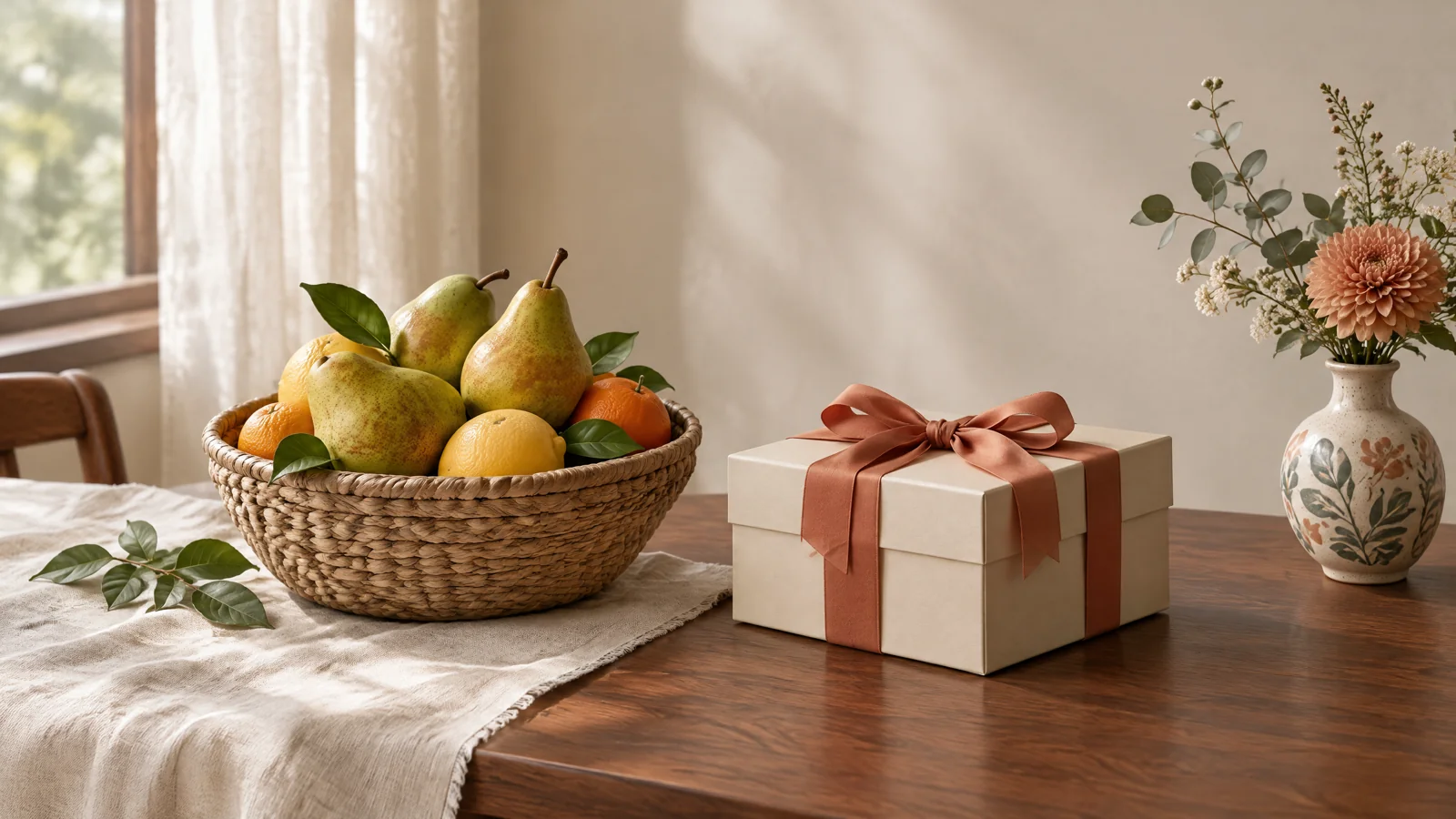
A photograph can help someone choose a basket, but it cannot tell a manager what they are approving. A useful brief explains the business purpose, who benefits and what the company will commit to. It also makes the alternative visible: if the recipient cannot accept food gifts, the proposal stops rather than turning into a different gift without permission.
For Canvas Blend readers organising a company milestone or client thank-you, the challenge is often coordinating several decisions without making the gesture feel administrative. Our Hong Kong team-building and aesthetic experience guide offers a related activity-planning starting point. This article addresses the separate gift order: how to turn an appealing idea into a decision that purchasing, compliance and the receiving office can actually carry out.
If you are searching for hair salon Central, plan a colour visit around meetings or after work, with enough time to discuss tone, upkeep, and your journey from Central.
01
What exactly should your approver be asked to authorise?
Start with a decision sentence, not a product catalogue. For example, propose a shared fruit gift to thank an identified client team after a completed project, subject to its acceptance policy. State the spending ceiling and the person responsible for the order. The approver can then assess the purpose before being distracted by ribbon colours or container size.
The merchant page for Corporate fruit baskets can help you identify a format to enquire about. Treat the page as a supplier reference, not a completed procurement specification. Its own information asks customers to confirm seasonal contents, delivery and branding. Your brief should convert those open questions into written requirements rather than assume the pictured combination is the agreed order.
Keep recipient eligibility separate from product preference. A manager may approve the purpose while leaving purchase on hold until the receiving organisation replies. Conversely, a recipient may welcome the gesture while your company has not authorised spending. Mark these as different decisions, with different owners, so an enthusiastic response is not mistaken for permission to place the order.
Include a short explanation of why fruit suits this occasion. Perhaps the receiving team wants something shareable rather than a personal keepsake. Avoid describing fruit as universally appropriate or medically beneficial. The brief needs a practical reason and a workable alternative, such as a written thank-you if gifts are not permitted, rather than a promise that everyone will enjoy the same food.
Ask for approval of a purpose, recipient group and controlled commitment—not approval of an image alone.
02
Can the recipient accept the gift before you choose the fruit?
Check acceptance before commissioning personalisation. Hong Kong's ICAC explains that gifts fall within the definition of an advantage under the Prevention of Bribery Ordinance. Its private-sector guidance describes restrictions on an agent accepting an advantage without the principal's permission when conducting that principal's business, and on the offeror. This is not a rule that a sufficiently inexpensive basket is automatically acceptable.[1]
The ICAC also explicitly distinguishes company gift-value policies from the law: there is no general financial threshold below which corrupt dealings become permissible. Record the business context as well as the proposed value. An active tender, contract negotiation or dispute merits escalation to your compliance or legal contact, not an informal judgement that a fruit gift is too modest to matter.[2]
Use Corporate gifts as a merchant's broader planning reference, while relying on official guidance and your organisations' policies for the permission decision. Ask the recipient's designated contact whether this specific proposal is acceptable. Describe the contents, intended beneficiary and timing. A shared office basket should not be used to work around a refusal of personal gifts.
Your brief should record a clear status: permitted for the specified proposal, awaiting confirmation, or do not send. Public-sector recipients require the relevant organisation's rules and an appropriate review rather than assumptions borrowed from private-sector practice. If no reliable answer arrives, retain the thank-you message and pause the purchase. That protects the relationship better than arranging a surprise the recipient must explain or return.
03
How do you specify useful contents rather than impressive size?
Define the receiving situation before describing abundance. A basket for one named person has a different purpose from a basket for an office kitchen. For a shared gift, ask the supplier for the proposed fruit varieties and quantities, with an explanation of what needs washing, peeling or cutting. A large container is not evidence that each intended recipient will receive a useful share.
If you are comparing Corporate gift hampers, distinguish fruit-only presentation from a mixed food hamper. Adding biscuits, preserves or drinks may expand the choice, but it also creates more ingredient labels, storage instructions and recipient preferences to verify. The correct comparison is how the contents will be used, not how many product categories can be fitted into the photograph.
Whole fruit can reduce the need to arrange immediate serving of cut pieces, but it does not remove food-handling responsibilities. The Centre for Food Safety advises washing fresh fruit thoroughly under running tap water before peeling, cutting or eating, including fruit whose rind will be discarded. It advises against washing produce with soap or detergent. Ask whether the receiving office has a suitable place to prepare the gift.[4]
Pre-cut fruit is a different operational choice. CFS describes it as high-risk because it often involves extensive handling and is usually eaten without heat treatment. Its commercial preparation guidance calls for prompt refrigeration at 4°C or below after cutting and clean, covered storage when not served immediately. If the receiving office cannot provide appropriate chilled storage and handling, do not select cut fruit simply because it looks easier to share.[3]
For packaged extras, obtain the actual ingredient and allergen information rather than infer suitability from a theme. CFS explains that unintended allergen cross-contamination can occur even where an allergen is not deliberately included in a recipe. A vegetarian, vegan or other dietary description is not evidence that every recipient's allergen is absent. Serious allergy or individual medical suitability needs confirmation with a qualified professional, not a gift organiser's assurance.[5]
| Proposed format | Practical advantage | What must be checked |
|---|---|---|
| Whole-fruit basket | Can be shared without committing to an immediate cut-fruit service | Fruit quantities, preparation facilities and item-specific storage instructions |
| Pre-cut fruit selection | Reduces preparation at the point of eating | Confirmed chilled handling, reception timing and suitable refrigeration [3] |
| Fruit with packaged food extras | Offers different types of items | Exact labels, allergens, use-by information and storage for every extra [5] |
| No physical gift | Avoids unwanted food and unresolved acceptance concerns | An appropriate thank-you message and any separate approval for another gesture |
04
Which requirements are fixed and which may change?
Separate non-negotiable conditions from flexible preferences. Fixed conditions might include an approved recipient, no alcohol, specified exclusions and a named receiving contact. Flexible elements could include ribbon shade or a proposed seasonal fruit replacement. This distinction matters because a supplier may otherwise interpret 'similar value' as permission to change something your approver considered essential.
A useful substitution instruction says what must happen before replacement, not just what the replacement should resemble. Require the supplier to propose a changed fruit list and obtain written acceptance from the named order owner. Changes that affect an ingredient exclusion, storage requirement or agreed spending limit should return to the relevant approver. Silence should not become consent to a food or financial change.
Keep visual references within their proper role. Canvas Blend's hair colour gallery illustrates how a reference helps communicate a preferred aesthetic without being a specification for another service. Likewise, a gift mood reference can describe restrained colours or a small footprint. It cannot verify fruit condition, portion quantities, ingredient labels or certification. Identify whether an image is an illustration rather than a photograph of the proposed order.
Consider a hypothetical Hong Kong design studio thanking client teams at several offices after a project. One office confirms that food gifts are welcome; another has not answered; a third prohibits them. The workable decision is to proceed only for the cleared proposal, hold the unanswered one and send no basket to the prohibited office. A single campaign does not require identical treatment when the receiving rules differ.
Before lightening through the mid-lengths and ends, read about balayage Hong Kong, assess your current hair condition, and leave time to discuss a simple at-home care routine.
| Requirement | Permitted flexibility | Decision owner |
|---|---|---|
| Recipient acceptance | No automatic transfer to another person or team | Compliance or designated organisational approver |
| Fruit assortment | Supplier may propose a replacement; no unapproved dispatch | Order owner, with food suitability rechecked where relevant |
| Packaging appearance | Agreed minor visual variation within the brief | Brand or event contact |
| Spending and delivery terms | No commitment outside the approved scope | Budget holder or purchasing contact |
05
What should the written quote include to avoid reopening approval?
Ask for the complete commitment, not merely the basket price. The quotation should separate contents, packaging, personalisation and delivery. For multiple addresses, make clear whether charges are per destination or cover an agreed route. Also request the terms for a missed handover, an address change and a cancellation. These are questions for the supplier's written response, not promises an article can make on its behalf.
When using the Gift hamper page to shortlist a direction, move any essential requirement into the enquiry itself. A service-page description does not establish that a particular extra, dietary request or delivery window is available for your order. Do not carry marketing claims about speed, ratings or starting prices into the approval document as independently verified evidence.
Include the quotation's validity period and the date by which approval is needed. A quote may depend on availability, so distinguish its stated validity from a guaranteed reservation. Ask when preparation becomes committed and what happens if your company responds later. This makes the decision about timing explicit without inventing a universal minimum lead time or assuming that sending an enquiry secures stock.
Your budget holder should be able to see the requested total commitment and the unresolved items together. If delivery or personalisation is still unpriced, label the proposal incomplete rather than approving the attractive subtotal. Where your company permits conditional approval, state the condition clearly and require the final amount to stay within the authorised limit. Any overrun goes back for approval before the supplier proceeds.
06
Who owns handover, storage and exception decisions?
A destination address is not a handover plan. Identify who may receive the basket, reception hours and any building access procedure. Clarify whether one reception desk can accept gifts for several teams or whether each needs a separate handover. Provide only the contact information needed for that task, and ask the supplier how delivery confirmation will be reported to your order owner.
Assign a receiving owner as well as a sending owner. The receiver checks that the package matches the expected gift and arranges suitable storage. CFS advises purchasing undamaged fruit and keeping perishable fresh fruit, including strawberries, as well as cut or peeled fruit, at 4°C or below when not consumed immediately. Whole fruit should not be treated as a blanket exemption from storage checks.[4]
Specify what happens if the receiver is absent, the package is visibly damaged or the basket differs from the approved contents. Ask the supplier about its notification process and proposed remedy before ordering. Do not instruct a courier to leave food at an unattended location unless that arrangement has been explicitly checked and accepted. A photograph at the building entrance does not, by itself, resolve the receiving responsibility.
In the hypothetical design-studio campaign, a client contact moving a meeting should trigger an address and timing check, not a casual instruction to reroute. The order owner first asks whether preparation or delivery has begun, then confirms the alternative with both recipient and supplier. Any new charge or unsuitable storage arrangement may require a fresh decision. This is the moment when named authority is more useful than decorative consistency.
- Write the business purpose, intended beneficiary and a no-gift alternative.
- Record recipient-policy clearance separately from your company's spending approval.
- Request the proposed fruit list, quantities and labels for packaged extras.
- Mark exclusions and other fixed requirements; name who can approve substitutions.
- Obtain a complete written quote with delivery, personalisation and exception terms.
- Confirm a receiving contact, access instructions and appropriate storage arrangements.
- Release the order only when the required decisions are recorded, then retain the final confirmation.
07
How can company aesthetics fit without bundling unrelated services?
A company celebration may have a shared visual direction, but that does not make every service one package. A fruit gift can use a restrained card and ribbon while the team separately plans photographs or personal styling. Keep food reception away from hair-service work areas and give each provider its own responsibility. Visual consistency is useful only when it does not obscure who supplies, handles and approves each element.
If colleagues independently want to plan their hair colour for a milestone event, Canvas Blend's colour pricing information belongs in a separate salon decision. It is not a corporate hamper quotation or evidence that styling is included in a food order. Keep the salon budget outside the gift approval unless your company has explicitly authorised a distinct employee benefit with its own scope.
Likewise, the Canvas Blend booking page is a route for salon enquiries, not a way to reserve gift deliveries. Participants should decide whether they want a hair service and confirm their individual requirements directly. A voluntary styling enquiry should not become an automatic expectation attached to a company thank-you or team photograph, especially when the original brief was simply to send fruit.
Readers can consult Vit So's professional profile for the salon's hair-colour context. This guide does not claim that Vit So has food-safety or floral qualifications, wrote this article or reviewed its recommendations. Canvas Blend and YumYum share ownership, and this is an AI-assisted editorial planning guide rather than an independent merchant review. Its practical recommendations still require appropriate organisational and supplier confirmation.
What else should you ask about celebration planning and everyday aesthetics?
Is a small fruit basket automatically acceptable under Hong Kong gift rules?
No. ICAC distinguishes internal value limits from the law and states that there is no general allowable-value threshold for corrupt dealings. Check the recipient's policy and business context, and refer legal questions to your qualified adviser.[1] [2]
Can we send a shared basket after an individual declines a gift?
Do not treat sharing as a workaround. Ask the organisation's designated contact whether that particular team gift is permitted. If it is prohibited or remains unresolved, do not dispatch it.
Do we need an exact fruit list before final approval?
Request a proposed list and quantities, then define how seasonal replacements will be approved. An image or a general description is insufficient where exclusions, sharing capacity or storage arrangements affect the decision.
Is cut fruit better for an office without preparation facilities?
Only if chilled handling, receiving and storage are workable. CFS calls for refrigeration at 4°C or below after cutting and appropriate covered storage when not served immediately. Convenience does not remove those requirements.[3]
Does a vegan or other dietary theme settle allergy suitability?
No. Obtain ingredient and allergen information and ask about cross-contact. A theme or product image does not establish absence of every allergen. Serious allergy and individual medical suitability require appropriate qualified advice.[5]
What if the supplier cannot confirm all costs before our approval deadline?
Mark the proposal incomplete or use your company's authorised conditional-approval process. State what remains unresolved and the limit of any authority. Do not allow an unpriced delivery or extra to become an automatic commitment.
How can you organise styling and supplier arrangements separately?
Prepare the brief in the order decisions actually matter: permission, usable contents, acceptable changes, complete financial commitment and accountable handover. A visually simpler basket with confirmed responsibilities may be the better choice than a more elaborate one whose conditions remain open. If an essential requirement cannot be resolved, pausing the gift is a valid outcome rather than a planning failure.
Before requesting a quotation, name the order owner and mark every unanswered question. Ask the supplier to confirm the proposal in writing, then return material changes to the relevant approver. The aim is not to create paperwork for its own sake; it is to send an appropriate thank-you without leaving the recipient, budget holder or reception team to solve the unfinished decisions.
When travelling with a stroller, luggage, or a pet carrier, information on hair salon Sheung Wan offers a practical way to check walking routes and arrival details beforehand.
Sources, shared ownership and editorial notes
- [1] POBO - private sector
- [2] Integrity and Corruption Prevention Guide on Managing Relationship with Public Servants
- [3] Safe Preparation of Pre-Cut Fruits and Fruit Juices
- [4] Food Safety Tips on Fruits and Fruit Products
- [5] Understanding Food Labels – Food Allergens
This AI-assisted guide is produced by Canvas Blend Editorial. It is a celebrations and everyday aesthetics guide, not a real-client, food-tasting, product-use or event record, and not an independent review. Canvas Blend and YumYum share the same owner; resource links are not independent third-party endorsements. It is not personally written by Vit So or reviewed by him as a food, baking, nutrition or floristry expert; his real salon background does not establish qualifications in those fields.
Obtain written confirmation from the supplier for service scope, delivery dates, food ingredients, allergens and cross-contact risks, product or supplier certification, actual availability and applicable terms. Images and general guidance are not evidence of these details. Discuss individual food allergies or health needs with a qualified medical professional. This page promises no price, discount, stock, refund or cancellation arrangement and does not describe external services as a joint salon package. Quotes, deposits, amendments and cancellation/refund arrangements depend on the supplier’s current written terms and individual confirmation.
This is an AI-assisted Canvas Blend editorial planning guide. Canvas Blend and YumYum share ownership; this is not an independent third-party review or a report of real customer experiences. The design-studio scenario is hypothetical. No food or floral qualification, authorship or review by Vit So is claimed. Availability, fruit contents, ingredients, allergen controls, any certification, delivery arrangements and written order terms must be confirmed with the relevant supplier. Obtain organisational or qualified professional advice where compliance, serious allergies or individual medical needs require it.
More Celebrations & Everyday Aesthetics Guides
Wedding dried seafood hampers: How to Confirm Your Family’s Customs
Choose a betrothal seafood hamper by confirming family customs, acceptable substitutions and food needs. Use our family brief before requesting a quote.
Wine hamper wedding gifts: personal touches without guesswork
Personalise a wedding wine hamper around both partners, not just a ribbon. Compare contents, keepsakes and delivery, then prepare a clear gift brief.
Health hampers: Ask About Ingredients, Not Wellness Promises
Choose a thoughtful health hamper by checking ingredient labels, allergens and halal evidence. Use our practical questions before confirming your gift.