Catering × Gifts × Cakes × Floristry × Occasion Styling
Farewell Cake: Choosing Milestone Desserts Everyone Can Share
Browse original Traditional Chinese celebrations and everyday aesthetics articles →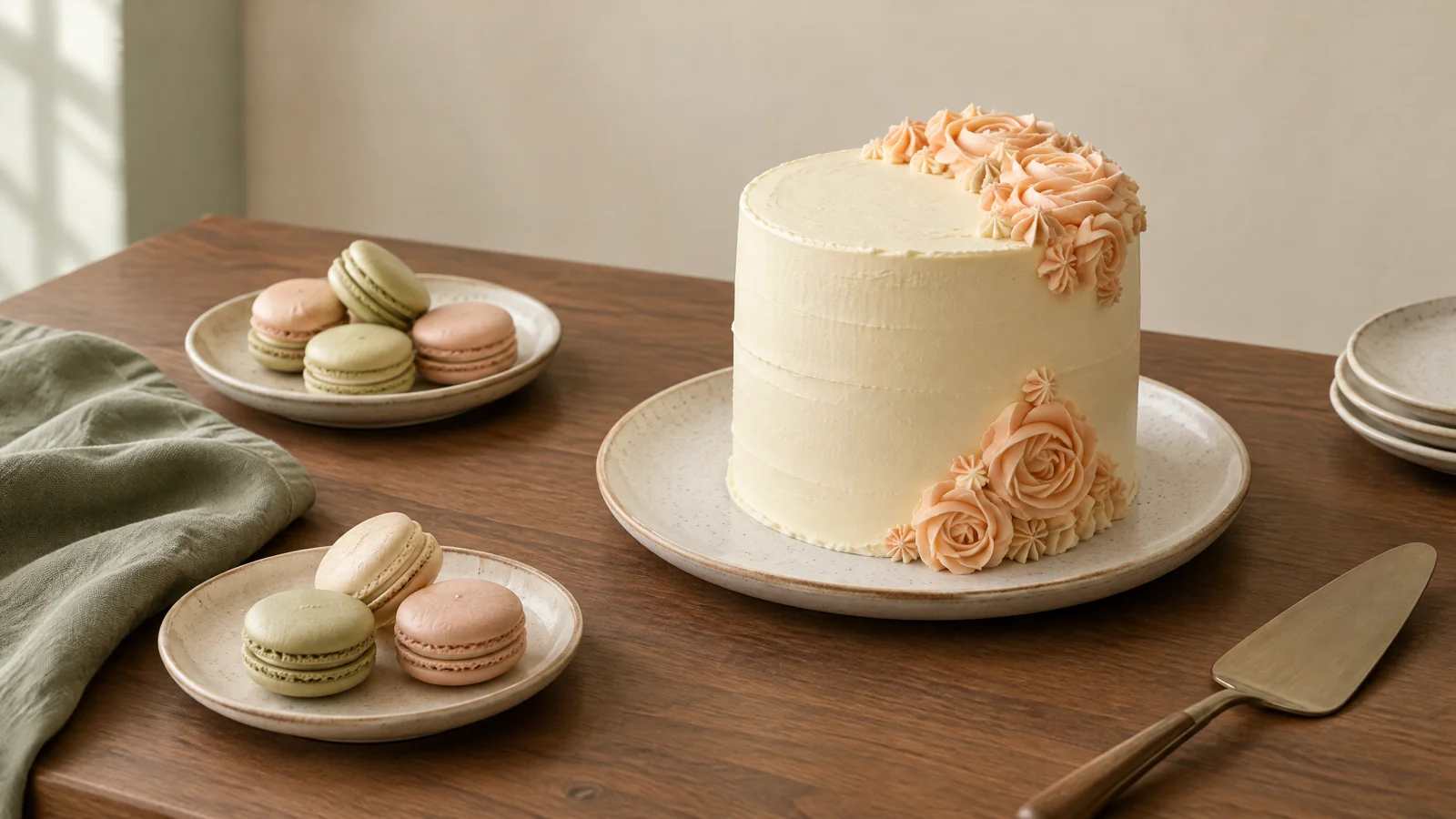
Choose a farewell cake by how people will receive their portions, then fit the decoration to the occasion. A whole cake suits a shared cutting moment; individual portions or a small centrepiece with separate servings suit staggered attendance, provided storage and dietary needs can be managed.
A colleague's last afternoon, a graduate's family dinner and a baby's hundred-day gathering all mark a transition, but they do not create the same dessert problem. Some guests sit down together. Others arrive between meetings or leave before speeches finish. The useful question is not which cake looks most celebratory. It is whether the proposed dessert gives the actual guests a workable opportunity to share the occasion.
Start with the moment people will eat, rather than the moment the cake arrives. A photograph needs an intact centrepiece; serving needs someone available to cut, plate and pass it around. When those jobs compete for the same few minutes, an elaborate design can become an obstacle. Separating the ceremonial cake from the serving portions is sometimes the more considerate choice, even when it means a less imposing display.
For readers planning a workplace send-off, Canvas Blend's guide to a Hong Kong team-building aesthetic experience offers a separate starting point for the gathering itself. Keep participation optional and decide whether the farewell should be a short thank-you or a longer shared activity. Dessert can support either format; it should not require everyone to abandon their schedule or explain publicly why they cannot eat it.
If you are planning a change of colour, learn about hair colour Hong Kong before your consultation and consider the techniques, tones and upkeep that suit your routine.
01
What should a farewell cake make easier for colleagues?
A farewell cake is a celebration cake chosen for someone's departure, not a fixed recipe or serving size. Its practical role is to create a brief point of connection around a person leaving the group. Before selecting the shape, ask whether the departing colleague welcomes a public moment, prefers a quiet gathering or would rather receive a message without a food-centred event. A thoughtful send-off does not have to be a surprise.
If you are considering YumYum, use its Farewell Cake page as an enquiry starting point, not proof that a particular design, portion count or handover arrangement is available. Describe the sharing problem first: a seated team, a reception counter or colleagues returning at different times. Ask which workable formats the bakery can confirm for that situation before becoming attached to a reference image.
For a team eating together, a low, accessible cake can make cutting less awkward than a tall sculpted piece. That is a planning preference, not a promise about any bakery's products. Ask for the proposed dimensions and a cutting guide, including which decorative pieces must be removed. A diameter alone tells you little about portions without knowing the height, structure and intended slice size.
If colleagues will drift in, prioritise a clear handover over a longer display. Put the thank-you message in a card so it survives after the first slice, and nominate a serving host rather than leaving a knife beside the cake. Let the departing person enjoy the conversation instead of managing every plate. The trade-off is less spontaneity, but the occasion becomes easier to share without turning the honouree into the organiser.
02
When is a whole cake worth the serving work?
A whole cake earns its place when most guests can witness the same moment and someone can serve promptly afterwards. It creates one recognisable focal point and allows the message to be seen before cutting. Its weakness is dependence on coordination: a delayed speech, absent host or unsuitable serving surface can hold up the entire dessert course. Choose it because that coordination exists, not because whole cakes seem more proper.
Individual portions reduce cutting at the venue and let the host offer dessert in batches. They do not automatically solve food safety or dietary suitability; their ingredients and storage requirements still matter. Separate packaging also adds material and can make the event feel more like distribution than a shared celebration. Consider that cost in presentation and waste alongside the convenience, rather than treating individual items as an upgrade in every setting.
A mixed format preserves a small cutting moment while using separate portions for most guests. It is especially useful when a centrepiece would otherwise need to be much larger simply to reach the headcount. The compromise is that some guests will not eat from the ceremonial cake. Explain the plan openly and confirm what the separate portions are, rather than implying that everyone receives an identical piece.
Consider a hypothetical farewell with twelve colleagues attending together and six collecting dessert later: eighteen intended recipients in total. One option is a modest centrepiece with separately arranged servings for the later group. Another is individual portions for everyone and a non-food message display. These are planning examples, not a YumYum package or serving guarantee. If safe later storage cannot be confirmed, change the distribution plan instead of assuming boxes make waiting harmless.
| Format | Best reason to choose it | Main compromise | Confirm before ordering |
|---|---|---|---|
| One whole cake | Guests can gather for cutting and immediate serving | Needs cutting time, equipment and a host | Usable portions, removable decorations and serving instructions |
| Individual portions | Guests need separate handovers or short serving queues | More packaging and less of a shared centrepiece | Ingredients, storage and packaging for each item |
| Small centrepiece plus separate portions | The photograph and the guest count need different solutions | Guests may receive different dessert formats | Combined quantities, presentation and dietary information |
| No shared dessert | Safe storage or suitable food cannot be arranged | The milestone needs a different focal point | A card, portrait or optional non-food activity |
03
How does graduation change the design and sharing decision?
Graduation often introduces a second audience: the graduate's friends and relatives may have different ideas about what the celebration should show. Ask the graduate which achievement they want recognised and who should see any personal details. A simple original motif can carry the message without reproducing a school crest, fictional character or branded graphic. If protected artwork is requested, confirm permission rather than assuming a bakery's gallery establishes the right to use it.
YumYum's Graduation Cake page can help frame a design conversation, but the useful brief still needs your gathering's constraints. Say whether the cake is for a dinner after the ceremony or a short get-together before people leave. Ask the merchant to confirm the selected design and serving format in writing. A photograph of a cake does not establish its current availability, ingredients or suitability for your guests.
If the graduate wants portraits as well as dessert, decide which photographs need the cake intact and take those before serving. Then release the cake for eating instead of keeping it untouched as background scenery. Share the desired atmosphere, not instructions to make everything match. Canvas Blend's hair-colour gallery can inform a separate styling conversation; cake decoration need not dictate someone's hair colour or appearance.
For a graduate leaving immediately for another engagement, a large leftover cake may become an unwanted responsibility. Agree in advance whether the host will manage any remaining food and whether the storage conditions allow that. A smaller dessert with a well-chosen message may suit the milestone better than an ambitious centrepiece nobody can look after. The achievement belongs to the graduate; the scale of the cake should not become a measure of how seriously it is celebrated.
04
Who is a hundred-day celebration cake actually for?
For planning purposes, treat a hundred-day cake as dessert for the invited guests, not food for the baby whose milestone is being marked. WHO states that complementary feeding generally begins at six months; its guidance is not an endorsement of celebration cake as infant food. A hundred-day theme does not change a baby's feeding needs. Individual feeding decisions belong with the child's qualified healthcare professional, not a bakery image or an editorial guide.[3]
The 100 Days Cake page is therefore a route to discuss a celebration design with YumYum, not a statement of infant suitability. Keep the enquiry focused on the adults and any older children who may receive dessert. Give the bakery the intended serving audience and ask about the selected recipe. Do not interpret a baby-themed topper, gentle colour palette or family photograph as evidence about nutrition or allergens.
Families differ in how they mark a hundred-day occasion, so ask the parents before making the event more formal or publishing the baby's personal details. A cake can carry a general message without a full name, birth date or photograph. Confirm the wording with the people responsible for the child. The choice is not between tradition and modernity; it is between a design the family welcomes and one that adds pressure they did not request.
A restaurant gathering also needs agreement about who receives the cake, where it can be stored and when staff can serve it. Do not assume permission to bring outside food includes cutting service or suitable refrigeration. A home gathering needs the same practical answers on a smaller scale. Where storage space is limited, reduce the display ambition or revise the dessert plan rather than leaving the cake out throughout every family photograph and speech.
After browsing PMQ or Hollywood Road, readers can use the local overview of hair salon Sheung Wan to coordinate a colour consultation with shopping, work, or weekend plans.
05
How can sharing remain inclusive without guessing about allergens?
Invite guests to share relevant dietary requirements privately before the order is finalised. Ask which allergen or restriction needs checking, rather than asking them to explain a diagnosis to the group. Hong Kong's Centre for Food Safety identifies eggs, milk, gluten-containing cereals and nuts among allergens found in foods such as cakes and desserts. This describes possible ingredients across the category; it does not establish the recipe of any YumYum cake.[2]
For the chosen item, request ingredient information for the sponge, filling, covering and decorations, together with information about unintended allergen contact during preparation. The Centre for Food Safety advises food businesses to prevent allergen contamination of products and cutlery and to confirm relevant ingredients with the kitchen.[2] That makes the serving arrangement part of the question too: a suitable separately supplied dessert can still be mishandled if utensils and plates are shared without a plan.
A dietary label answers only the question it actually addresses. Do not convert a vegan or gluten-free description into a promise that an item excludes every other allergen. A photograph cannot resolve that uncertainty, and a removed topping does not establish how the rest of the cake was prepared. Ask for clear written information. If it remains incomplete, do not describe the dessert to a guest as safe or personally suitable.[2]
For severe allergies or individual medical needs, the guest should assess the information with an appropriate qualified professional. Offer an alternative only when its own suitability can be established; otherwise make participation possible without eating. A card, shared photograph or short message lets someone remain included without being asked to take a dietary risk. The thoughtful trade-off may be fewer shared food options, with greater respect for each person's decision.
06
What must happen between arrival, display and the last portion?
Build a timeline from collection or handover to the final serving, and ask the supplier which parts require refrigeration for the selected cake. The Hong Kong Centre for Food Safety identifies 4°C to 60°C as the temperature danger zone, where bacteria can grow rapidly, and stresses temperature control through food preparation.[1] A room that feels comfortable to guests is not proof of appropriate food storage, and an insulated box alone is not a temperature record.
Food Standards Australia New Zealand explains its rule for potentially hazardous refrigerated food using a 5°C to 60°C range: under two hours allows use or return to refrigeration; between two and four hours allows use but not refrigeration for later; more than four hours requires disposal. Time is cumulative across preparation, storage, transport and display.[4] This is supplementary guidance, not a YumYum shelf-life guarantee; follow the confirmed product instructions and local requirements.
In a hypothetical timeline, forty-five minutes of unrefrigerated transport, twenty minutes waiting and forty minutes on display total 105 minutes. That leaves little margin before two hours, even before considering any earlier unrefrigerated preparation. The arithmetic illustrates why timing should start before the speech, not after it. It does not certify the cake as safe, because the applicable temperatures, product characteristics and earlier handling history still need to be known.[4]
Assign one person to record the handover and display times and to follow the supplier's instructions. Photograph promptly, serve in manageable batches if the format allows, and keep any remaining food under the required conditions. Decide the leftovers policy before the gathering. Where the handling history is uncertain, do not send portions home as a gesture of generosity; the official guidance advises discarding food when in doubt.[4]

07
How should the dessert and occasion styling be planned together?
Coordinate the event calendar, but keep the food and styling decisions separate. If someone wants a refreshed look for graduation portraits or a farewell dinner, compare balayage options on their own merits and discuss the desired finish and upkeep. There is no need to change hair colour to match icing. A coherent occasion can come from a calm schedule and a compatible mood rather than a single colour imposed on every element.
Canvas Blend's Vit So profile describes his hair-colour background; it is not evidence of food-safety, pastry or floral qualifications. This guide does not claim that he authored or reviewed its food advice. Direct recipe, handling and ingredient questions to the bakery and qualified professionals where needed. Direct hair-colour questions to the salon. Keeping those responsibilities distinct helps readers know who can actually answer each part of the plan.
For a separate salon visit, use the Canvas Blend booking page to discuss timing rather than squeezing an appointment into the cake's collection window. The bakery's handover and the salon's service schedule must each be confirmed independently. If the day is already crowded, simplify one commitment. A milestone is easier to enjoy when nobody has to choose between completing a personal appointment and collecting food that needs prompt attention.
Send the bakery a concise brief that makes the sharing constraints visible, and request a written response covering the selected design, quantities, ingredients, handling and order terms. Confirm any venue permissions separately. If the proposed cake cannot fit the real serving window or dietary information remains unresolved, change the format before adding decoration. The best next step is a clearer decision, not a bigger order or an assumption that the merchant will solve every event detail.
- Confirm who wants dessert, who will attend together and who may leave early.
- Choose whether the priority is a shared cutting moment, efficient portions or both.
- Approve the message and original design with the honouree or the baby's parents.
- Obtain ingredient and allergen-contact information for each proposed food item.
- Confirm refrigeration, transport, serving responsibility and the leftovers plan.
- Request written quantities, venue handover details, charges and cancellation terms before committing.
What else should you ask about celebration planning and everyday aesthetics?
Should I order by cake diameter or guest count?
Provide the expected number of people who will actually receive dessert, then ask for a usable portion count and cutting guide for the selected design. Diameter alone does not show the cake's height, structure or intended slice size.
Are individual portions always better for a workplace farewell?
No. They help with separate handovers but add packaging and still require appropriate storage and ingredient checks. A whole cake may work better when everyone can gather and a host can cut and serve it promptly.
Can a baby eat the cake at a hundred-day celebration?
Do not treat a hundred-day cake as infant food. WHO says complementary feeding generally starts at six months. The cake's theme does not establish suitability; discuss individual feeding needs with the child's qualified healthcare professional.[3]
Does a vegan cake mean every allergic guest can share it?
No. A dietary description does not establish exclusion of all allergens or how unintended contact is controlled. Obtain information for the complete item and serving process, and let guests with medical needs assess it with an appropriate professional.[2]
Does putting a cake back in the fridge reset its display time?
No. Food Standards Australia New Zealand says time outside refrigeration in the relevant temperature range is cumulative, including preparation, transport and display. Follow the selected product's confirmed instructions rather than treating refrigeration as a reset.[4]
Are YumYum's pictured designs and delivery arrangements guaranteed?
No guarantee is made here. Confirm the exact design, supply date, ingredients, portion count, handover arrangements and written order terms directly with the merchant. This guide does not independently verify ratings, delivery speed, prices or availability.
How can you organise styling and supplier arrangements separately?
Choose the dessert that fits the way the milestone will be shared. A whole cake can be right for a brief collective moment; separate portions can be right for guests on different schedules; no shared food can be right when suitable ingredients or storage cannot be established. None of these choices makes the farewell, graduation or family occasion less meaningful.
Before enquiring, write down the guests, the serving moment and the person responsible for handling the food. Add the preferred message and any unresolved dietary questions. With those answers visible, you can discuss a realistic design rather than working backwards from a photograph. Keep personal styling optional and food decisions evidence-based, so the people being celebrated remain more important than the centrepiece.
While comparing hair colour salon Central, consider a colour appointment that accounts for professional presentation, travel plans, and root maintenance, with a location convenient for journeys from Central.
Sources, shared ownership and editorial notes
- [1] Centre for Food Safety: Temperature Danger Zone and 2-hour / 4-hour rule
- [2] Centre for Food Safety: Food allergens
- [3] WHO Guideline for complementary feeding of infants and young children 6-23 months of age
- [4] Food Standards Australia New Zealand: 2-hour / 4-hour rule
This AI-assisted guide is produced by Canvas Blend Editorial. It is a celebrations and everyday aesthetics guide, not a real-client, food-tasting, product-use or event record, and not an independent review. Canvas Blend and YumYum share the same owner; resource links are not independent third-party endorsements. It is not personally written by Vit So or reviewed by him as a food, baking, nutrition or floristry expert; his real salon background does not establish qualifications in those fields.
Obtain written confirmation from the supplier for service scope, delivery dates, food ingredients, allergens and cross-contact risks, product or supplier certification, actual availability and applicable terms. Images and general guidance are not evidence of these details. Discuss individual food allergies or health needs with a qualified medical professional. This page promises no price, discount, stock, refund or cancellation arrangement and does not describe external services as a joint salon package. Quotes, deposits, amendments and cancellation/refund arrangements depend on the supplier’s current written terms and individual confirmation.
This is an AI-assisted Canvas Blend editorial guide. Canvas Blend and YumYum share an owner, so it is not an independent third-party review. The hypothetical examples are planning illustrations, not real customer cases. No food, pastry or floral qualification, authorship or food-advice review is attributed to Vit So. YumYum's pages were read as merchant information, not independent proof of ratings, prices, speed, certifications or service guarantees. Confirm supply, ingredients, any claimed certification, handling instructions and written order terms directly with the merchant; individual medical or infant-feeding questions require qualified professional advice.
More Celebrations & Everyday Aesthetics Guides
Custom Cake: Turn a Birthday Idea into a Clear Order Brief
Turn a birthday theme into a clear cake brief with design priorities, ingredient questions and handover details. Prepare your enquiry before ordering.
Baking Class: Choose Repeatable Skills Before the Finished Photo
Choose a baking workshop by what you will practise, not just what you will photograph. Compare learning goals, safety and home use before enquiring.
Wedding Cake: Match Edible Details Without Overmatching Styling
Coordinate wedding cake colour, edible art and bridal styling without matching every detail. Use our comparison and approval checklist to shape your brief.